
CPAP power consumption becomes part of your therapy the moment you begin using a CPAP machine every night, whether you actively think about it or not. Many people only start paying attention to it when they travel, experience power outages, or begin planning a backup setup — and that’s usually when uncertainty about electricity needs and runtime first appears..
CPAP machines are not high-energy devices compared to appliances, but they run continuously for hours. That overnight operation changes how power needs should be calculated. Understanding CPAP power consumption helps you avoid guesswork and prepare realistically for outages or battery use.
Why CPAP Power Consumption Matters
CPAP therapy works because airflow stays consistent while you sleep. The moment power stops, therapy stops. That makes electricity part of the treatment itself, not just a convenience.
Many users assume a CPAP uses very little power and any battery will work. Others overestimate and buy unnecessarily large systems. Both mistakes come from not understanding how power usage actually works.
Planning starts with one simple idea:
You don’t need exact numbers. You need realistic ranges.
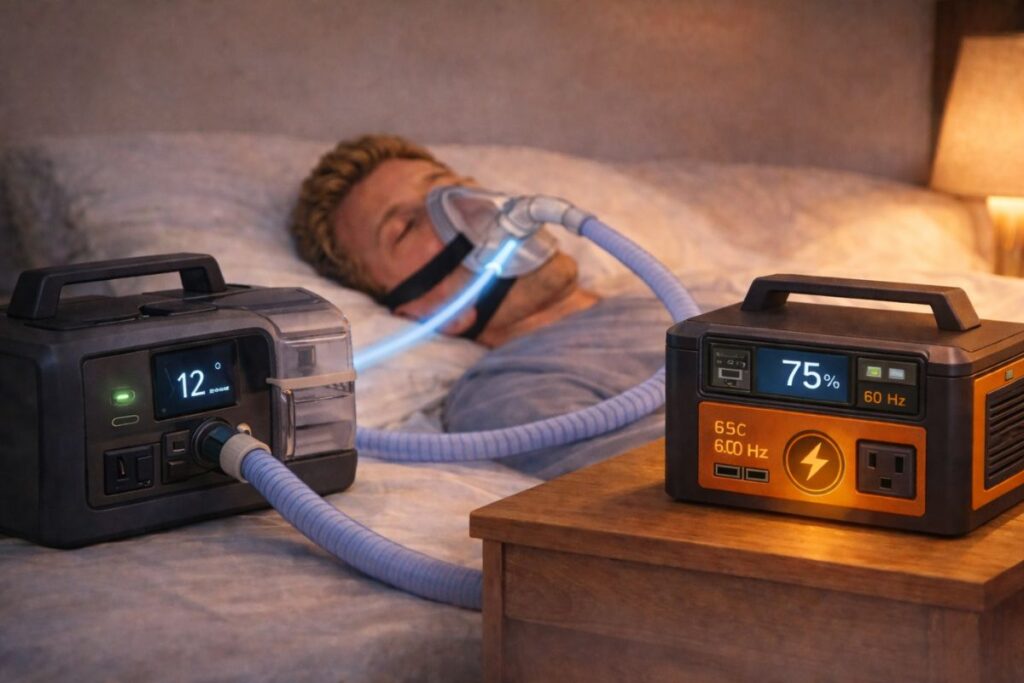
Average CPAP Power Consumption
Most CPAP machines operate efficiently, but actual consumption varies more than people expect.
Typical Usage Levels
Basic CPAP units without heating features draw modest electricity during steady operation. The airflow motor is designed for efficiency. However, that’s only part of the picture.
The moment comfort features are enabled, power use increases.
APAP vs CPAP vs BiPAP
Different therapy types change electrical demand:
- CPAP: consistent pressure, steady usage
- APAP: adjusts pressure, usage varies throughout the night
- BiPAP: dual pressure delivery, typically higher demand
Auto-adjusting systems respond to breathing patterns, which means power draw isn’t always constant.
Why Real Usage Differs From Specifications
Manufacturer numbers come from controlled conditions. Real-life use includes:
- mask leaks
- room temperature changes
- pressure fluctuations
- humidifier activity
These factors shift consumption from “ideal” to “practical.”
CPAP Wattage Per Night
People often ask how much electricity a CPAP uses in a single night. The answer depends on duration and configuration.
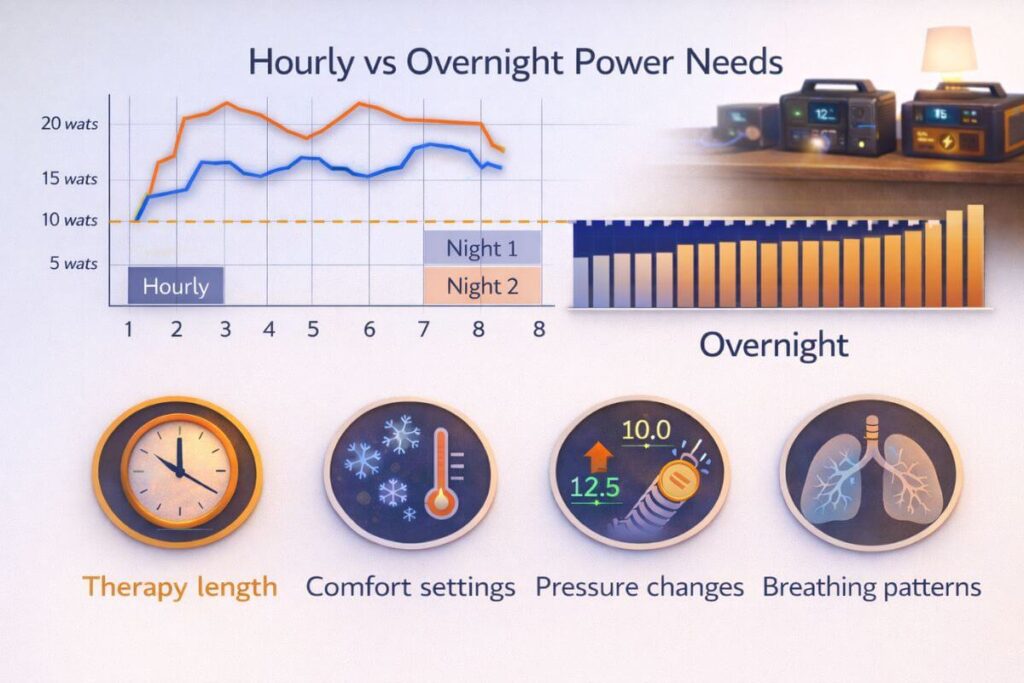
Hourly vs Overnight Thinking
Looking at hourly consumption doesn’t help much. What matters is how that adds up across an entire sleep cycle. A small hourly draw becomes significant when multiplied by six to eight hours.
What Changes Nightly Power Needs
Nightly usage isn’t identical every time. It shifts based on:
- therapy length
- comfort settings
- pressure changes
- breathing patterns
Two nights with the same machine can still produce different consumption levels.
CPAP Humidifier Power Usage
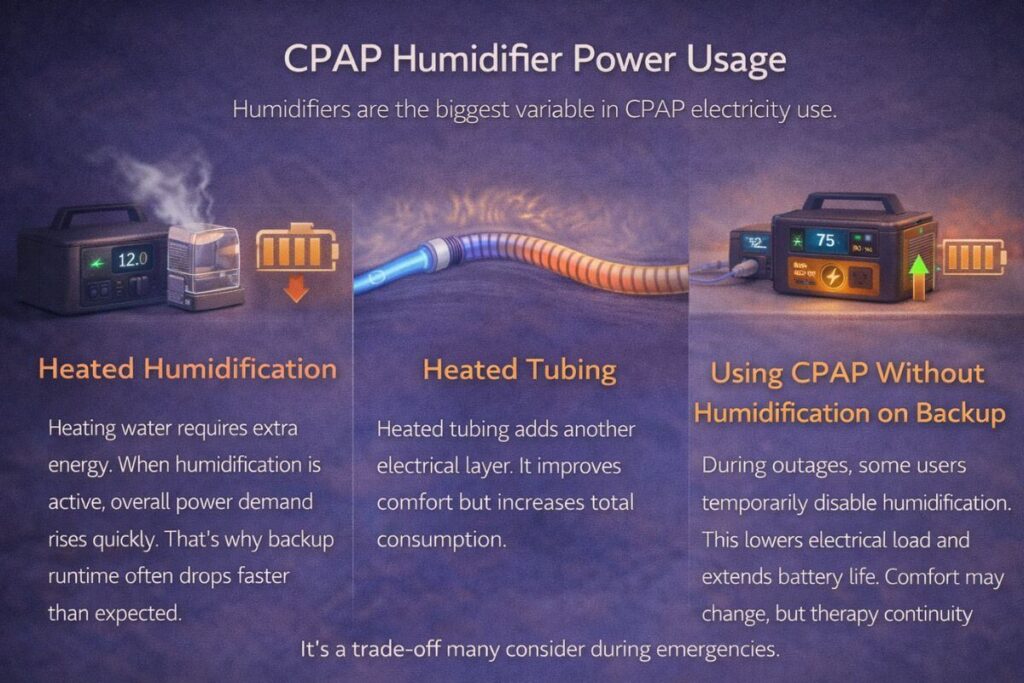
Humidifiers are the biggest variable in CPAP electricity use.
Heated Humidification
Heating water requires extra energy. When humidification is active, overall power demand rises quickly. That’s why backup runtime often drops faster than expected.
Heated Tubing
Heated tubing adds another electrical layer. It improves comfort but increases total consumption.
Using CPAP Without Humidification on Backup
During outages, some users temporarily disable humidification. This lowers electrical load and extends battery life. Comfort may change, but therapy continuity improves.
It’s a trade-off many consider during emergencies
How Much Power Does a CPAP Use on Battery?
When batteries enter the picture, the conversation changes from electricity use to energy storage.
Watts vs Energy Storage
Watts describe how fast power is used. Stored energy determines how long a device can run.
A low-power device can still drain a small battery if it runs all night.
Estimating Runtime
Battery runtime depends on:
- device power draw
- battery capacity
- efficiency losses
- active features
There’s no universal runtime figure because setups differ.
Why Testing Beats Guessing
Testing a CPAP with a backup power source reveals:
- real runtime
- heat behavior
- compatibility issues
That information is far more useful than theoretical estimates.
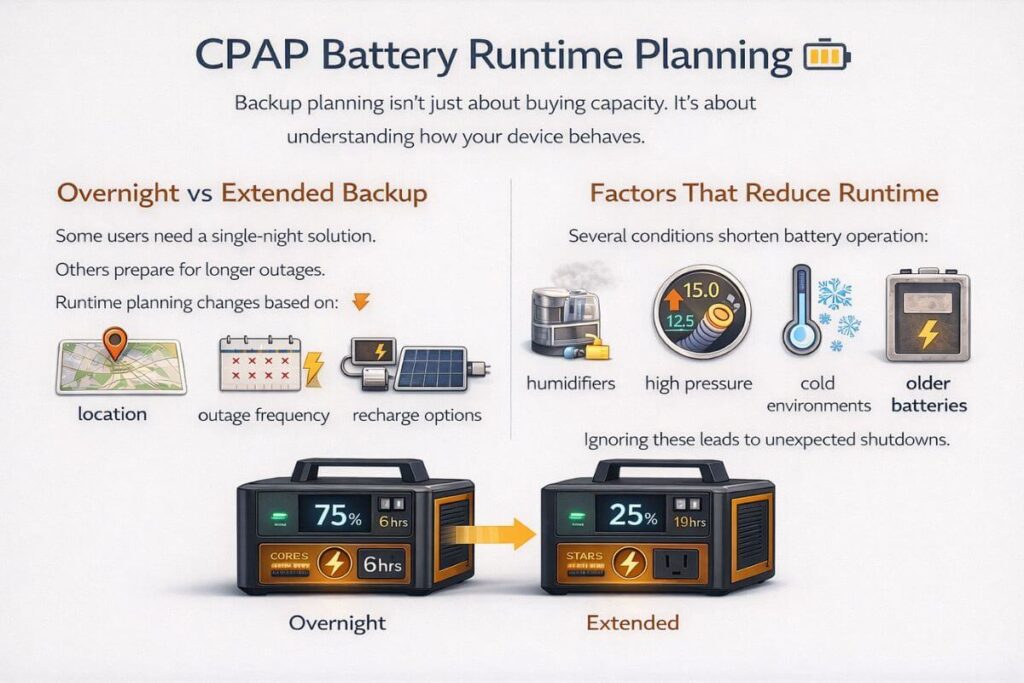
CPAP Battery Runtime Planning
Backup planning isn’t just about buying capacity. It’s about understanding how your device behaves.
Overnight vs Extended Backup
Some users need a single-night solution. Others prepare for longer outages. Runtime planning changes based on:
- location
- outage frequency
- recharge options
Factors That Reduce Runtime
Several conditions shorten battery operation:
- humidifiers
- high pressure
- cold environments
- older batteries
Ignoring these leads to unexpected shutdowns.
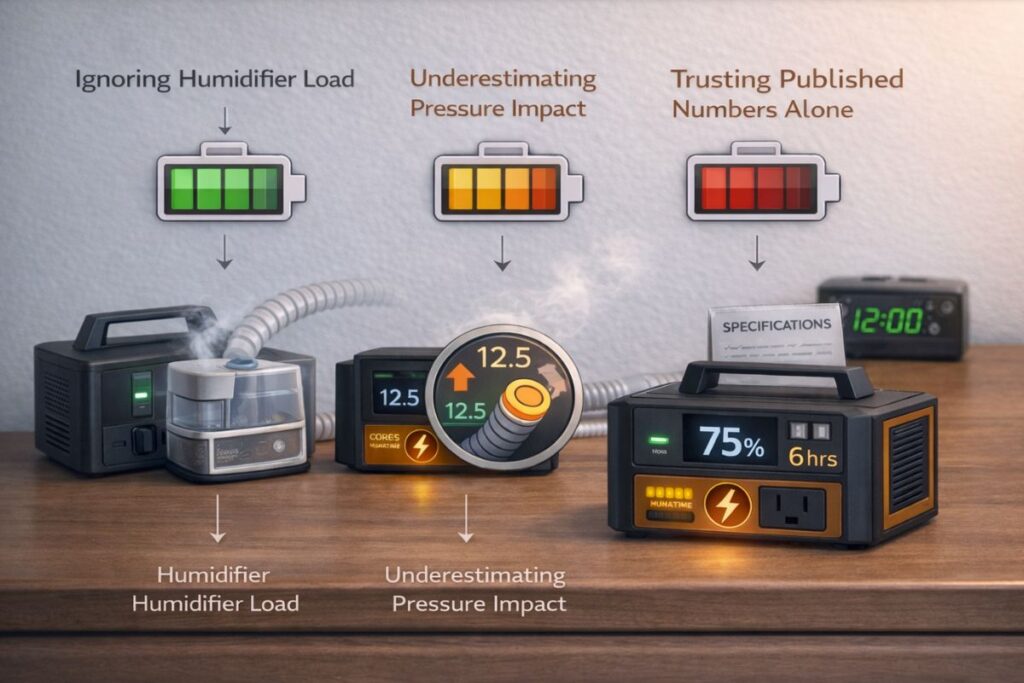
Common Mistakes When Estimating CPAP Power Needs
Most problems don’t come from equipment failure. They come from assumptions.
Ignoring Humidifier Load
Users often calculate airflow motor usage only. Humidifiers can significantly increase total demand.
Underestimating Pressure Impact
Higher therapy pressure requires more motor work, especially in auto-adjusting systems.
Trusting Published Numbers Alone
Manufacturer ratings don’t reflect personal use patterns. Real-world conditions always vary.
Understanding CPAP power safety is essential before planning any backup setup.
FAQs About CPAP Power Consumption and Electricity Use
1) How much power does a CPAP machine actually use per night?
A CPAP machine’s nightly electricity use depends on how long it runs and which features are enabled. The airflow motor alone is relatively efficient, but overnight therapy means the device operates continuously for several hours. When humidification, heated tubing, or higher pressure settings are added, total consumption increases.
Instead of focusing on a single number, it is better to think in ranges. A basic setup without heating features uses less power and is easier to support with backup systems. A fully configured setup with humidification and higher therapy pressure requires more planning. The difference between these two scenarios can be significant across a full night.
Real usage varies between individuals, so testing the device under normal sleep conditions gives the most accurate estimate of nightly consumption.
2) Does a CPAP machine use a lot of electricity compared to other home devices?
Compared to appliances like refrigerators, heaters, or microwaves, CPAP machines use relatively modest electricity. However, the comparison changes because CPAP therapy runs continuously overnight rather than in short bursts.
The consistent operation is what makes power planning important. Even moderate electricity use becomes meaningful when multiplied across several hours every night. Over time, this steady consumption adds up, especially when comfort features are active.
From a household perspective, CPAP power use is manageable. From a therapy perspective, it must be reliable.
3) How does a humidifier change CPAP power consumption?
Humidifiers are one of the biggest factors affecting electricity use. Heating water requires additional energy, and when humidification runs throughout the night, overall consumption rises noticeably.
Heated tubing also adds to this load. While both features improve comfort, they increase demand on power sources and reduce battery runtime during outages. This is why many users temporarily reduce humidification when operating on backup power.
The change in comfort is often acceptable for short periods if it allows therapy to continue uninterrupted.
4) Can a battery realistically run a CPAP overnight?
Yes, many batteries can support overnight CPAP use, but the outcome depends on device settings and battery capacity. Runtime varies widely depending on pressure level, humidifier use, and overall efficiency.
Some users find that their backup system runs the CPAP comfortably through the night. Others discover it lasts fewer hours than expected. The difference usually comes from assumptions made before testing.
Running the CPAP on backup power in advance reveals realistic runtime expectations and helps avoid surprises during an actual outage.
5) Why do two CPAP users get different power results with the same machine?
Even when two people use identical devices, their power consumption can differ due to therapy settings and sleep conditions. Pressure levels, humidification, tubing heat, and duration of use all influence electricity demand.
Environmental factors also matter. Room temperature, mask fit, and airflow resistance change how hard the motor works. Over time, equipment aging can also affect efficiency.
Because of these variables, personal testing provides more reliable insight than general estimates.
6) Is it safe to run a CPAP without humidification during power outages?
For many users, running a CPAP without humidification for short periods is acceptable. Comfort may decrease, and some dryness may occur, but therapy can continue. Reducing humidifier use lowers electricity demand and extends battery runtime.
However, users who rely heavily on humidification for nasal comfort or medical reasons should consult their provider before making changes. Each situation is different, and comfort requirements vary.
The decision often comes down to balancing comfort with continuity during temporary power loss.
7) What is the most common mistake people make when planning CPAP power use?
The most common mistake is underestimating how settings affect consumption. Many users assume airflow motor usage alone determines electricity needs and forget about humidifiers, pressure adjustments, and runtime variability.
Another frequent issue is relying entirely on manufacturer specifications without testing real usage. Those numbers provide a starting point but don’t reflect personal therapy patterns.
Planning based on real conditions — not assumptions — is what leads to reliable backup setups and consistent therapy.
Final Thoughts
CPAP machines don’t require huge amounts of electricity, but they rely on stability. Overnight use means small power differences add up. Comfort features, therapy pressure, and runtime all shape real consumption.
Understanding how much power your CPAP uses removes uncertainty. It allows you to plan backup realistically, avoid overbuying equipment, and prevent therapy interruptions.
Reliable therapy starts with consistent airflow. Consistent airflow starts with stable power.
related tags:
#cpapbackuppower #cpapbatterybackup #cpappoweroutage #cpappowersafety #portablepowerstationcpap