
When planning backup power for sleep therapy, one question comes up repeatedly: pure sine wave vs modified sine wave cpap — does it actually matter, or is it just technical marketing language?
For a CPAP user, the answer is not theoretical. The type of electrical waveform powering the machine directly affects motor stability, humidifier behavior, and long-term device safety. Understanding pure sine wave vs modified sine wave cpap setups helps prevent therapy interruptions, equipment stress, and unsafe power choices.
This guide explains the difference in simple terms, includes real calculations, and shows why waveform quality matters when running a CPAP machine.
What Is a Pure Sine Wave Power Supply?
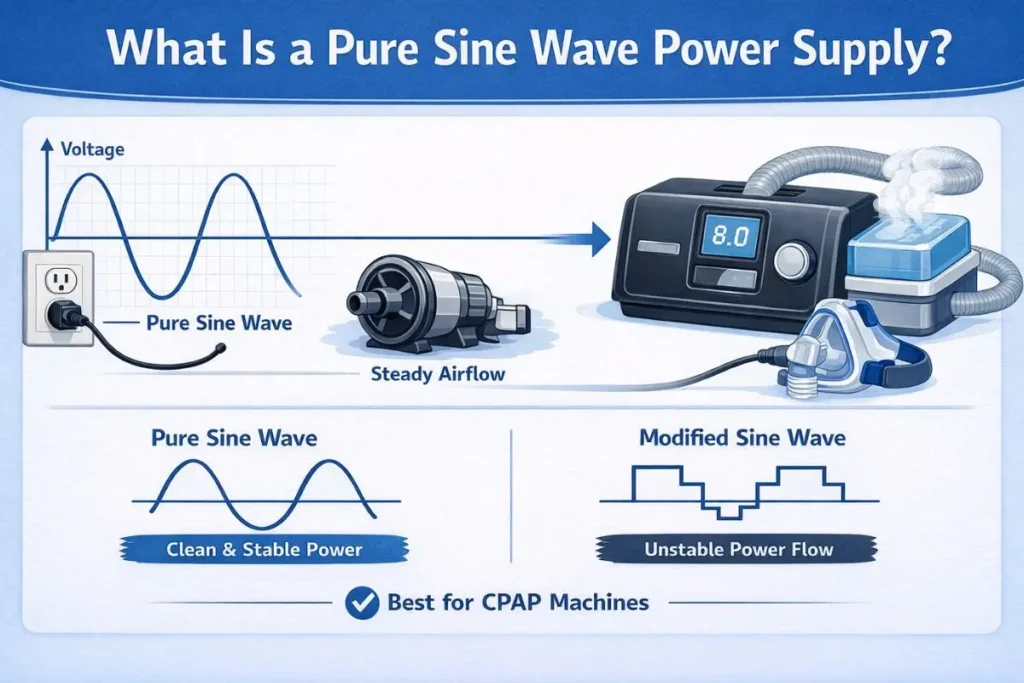
Utility electricity from your wall outlet follows a smooth, continuous waveform. This clean pattern is called a pure sine wave. Medical devices, including CPAP machines, are designed to operate using this stable electrical flow.
The airflow motor inside a CPAP machine relies on consistent voltage delivery. When power flows smoothly, the motor maintains steady pressure, and the humidifier heating element behaves predictably. This is why pure sine wave power is considered the safest match for CPAP electronics.
Understanding pure sine wave vs modified sine wave cpap decisions starts here — CPAP machines are engineered around clean AC power.
What Is Modified Sine Wave Power?
Modified sine wave power comes from budget inverters and some lower-cost battery systems. Instead of smooth electricity, it delivers a stepped waveform that approximates AC power.
It can run simple devices like lights, fans, or phone chargers. But devices with motors, heating components, and control electronics respond differently.
When comparing pure sine wave vs modified sine wave cpap setups, the biggest difference is how the machine behaves under load — not just whether it turns on.
Pure vs Modified Sine Wave: The Core Electrical Difference
The waveform determines how electricity flows through a CPAP’s internal components.
Voltage Stability
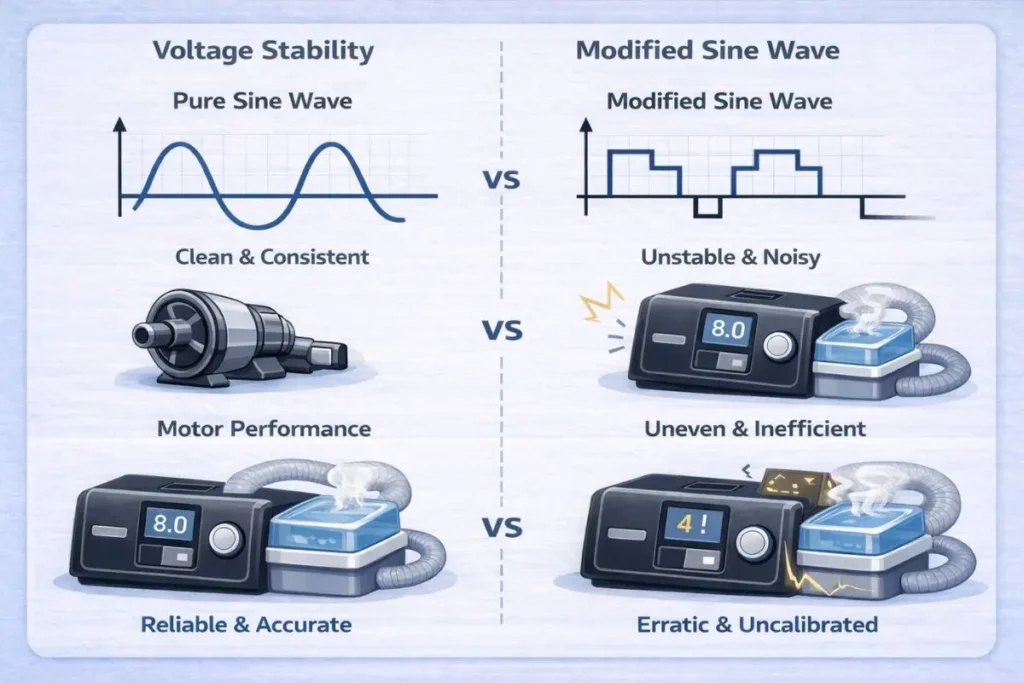
Pure sine wave delivers consistent voltage with minimal fluctuation. Modified sine wave introduces sharp transitions that create electrical noise and instability.
Motor Performance
CPAP airflow motors depend on stable current. With pure sine wave, the motor operates smoothly. With modified sine wave, the motor may draw uneven power, leading to vibration or inefficiency.
Electronic Control Systems
Modern CPAP machines include sensors and microprocessors. These rely on clean power. Irregular waveform input can affect calibration and pressure adjustments.
This is why pure sine wave vs modified sine wave cpap discussions are not just technical debates — they impact real therapy performance.
Why CPAP Machines Need Pure Sine Wave Power
Sensitive Electronics
CPAP machines regulate airflow using internal circuitry. Clean power prevents electrical stress and reduces long-term component wear.
Pressure Consistency
Sleep therapy depends on steady pressure. Waveform instability can lead to small fluctuations that affect therapy effectiveness.
Humidifier Heating Stability
Heated humidifiers require stable energy flow. Modified waveforms can create uneven heating, increased current draw, or inefficient operation.
Pure sine wave vs modified sine wave cpap planning is therefore part of safety preparation, not just convenience.
Real Calculation: CPAP Power Use With Inverter Types
Let’s break this down using real numbers.
Example CPAP Setup
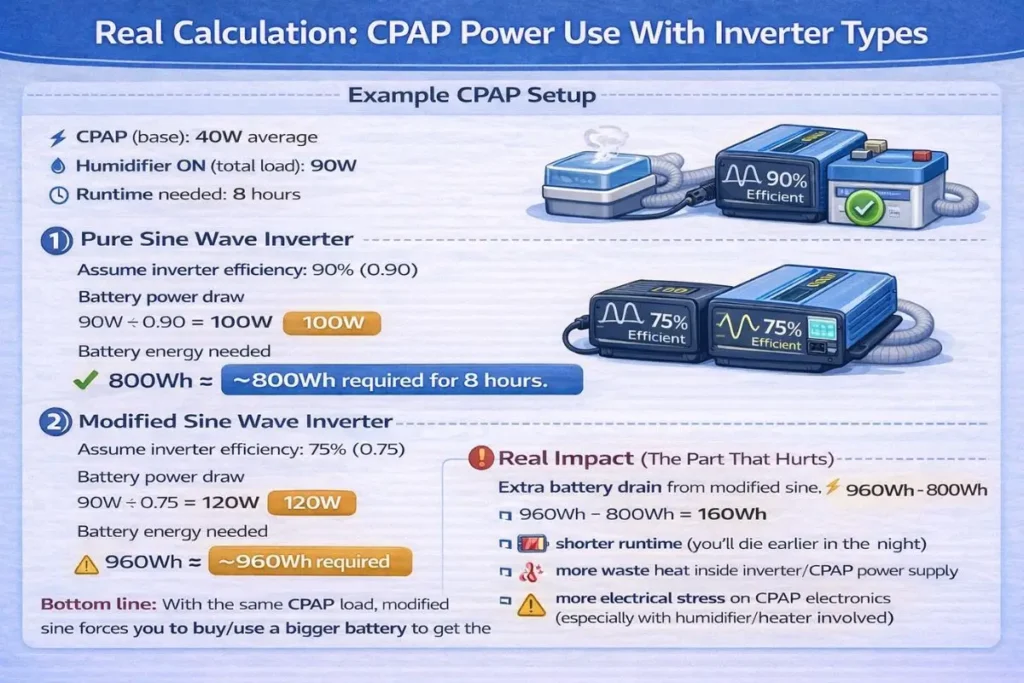
- CPAP machine: 40W average
- Humidifier active: 90W total load
- Runtime needed: 8 hours
Using Pure Sine Wave Inverter
Assume inverter efficiency: 90%
Power drawn from battery:
90W ÷ 0.90 = 100W actual consumption
Battery energy required:
100W × 8 hours = 800Wh
Using Modified Sine Wave Inverter
Efficiency drops due to waveform loss.
Assume efficiency: 75%
90W ÷ 0.75 = 120W actual consumption
Battery energy required:
120W × 8 hours = 960Wh
Real Impact
Modified wave increases battery drain by:
960Wh − 800Wh = 160Wh loss
That equals:
- reduced runtime
- increased heat
- higher stress on electronics
This is the practical side of pure sine wave vs modified sine wave cpap decisions.
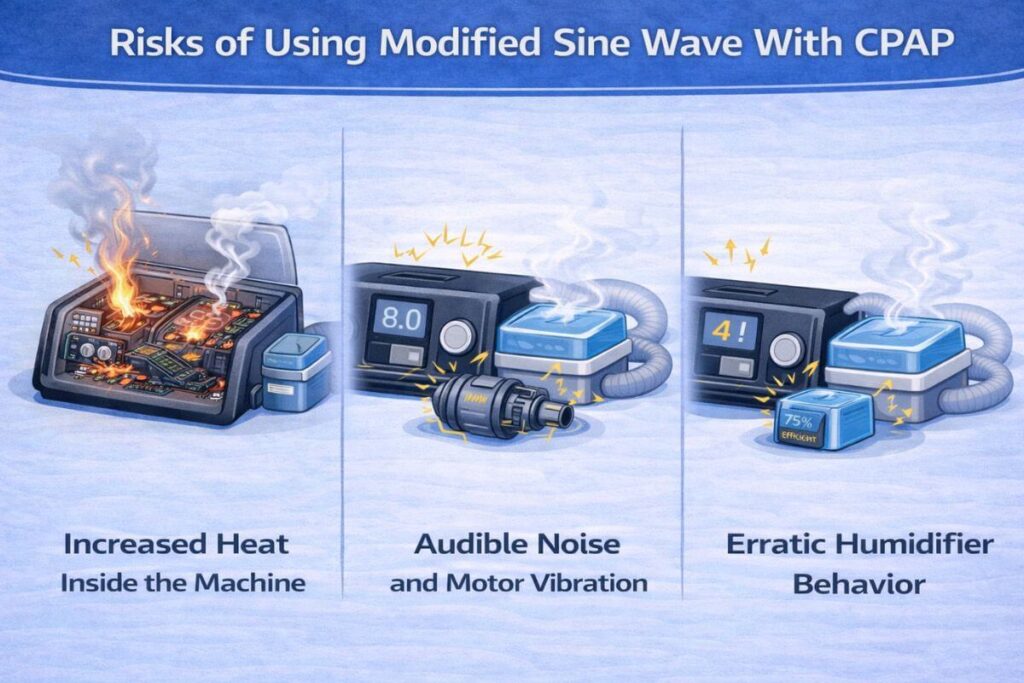
Risks of Using Modified Sine Wave With CPAP
Increased Heat Inside the Machine
Modified sine wave electricity is not smooth. It delivers power in abrupt steps rather than a continuous flow. Inside a CPAP machine, this creates extra electrical resistance within the power supply and motor circuitry.
Over time, this resistance generates heat. The device may still function, but internal components are working harder than intended. Consistent heat exposure can shorten the lifespan of electronic parts and affect reliability during long-term use.
Audible Noise and Motor Vibration
Some users notice a faint buzzing or vibration when a CPAP runs on modified sine wave power. This happens because the airflow motor is not receiving a stable electrical signal.
Instead of rotating smoothly, the motor compensates for uneven power input. The result is subtle mechanical stress that may not seem serious at first, but it reflects inefficiency in operation.
Erratic Humidifier Behavior
Humidifiers rely on stable current to maintain consistent heating. When powered by modified sine wave electricity, the heating element may draw power unevenly.
This can lead to:
- inconsistent warmth
- increased power consumption
- reduced runtime from batteries
While the humidifier may still function, efficiency drops and overall system stability decreases.
Long-Term Component Stress
Repeated exposure to irregular electrical flow can gradually affect internal circuitry. Motor drivers, voltage regulators, and control boards experience additional stress.
Damage rarely happens immediately. Instead, it appears over months of use — reduced reliability, unexpected shutdowns, or inconsistent performance.
The machine may run — but running is not the same as operating safely or efficiently.
How to Check If Your Power Source Is Pure Sine Wave
Read the Specifications Carefully
Reliable power sources clearly mention “pure sine wave output” in their technical specifications. This is the first thing to verify before using any inverter or portable power system for CPAP therapy.
Be Cautious With Generic Inverter Labels
Lower-cost inverters often avoid clearly stating waveform type. If the documentation does not explicitly confirm pure sine wave output, it is usually modified.
Assuming compatibility without checking can lead to unstable operation later.
Check CPAP Manufacturer Guidance
Many CPAP manuals include recommended power requirements. Some explicitly state the need for pure sine wave electricity, especially when humidifiers are involved.
Following manufacturer guidance ensures both safety and long-term device reliability.
Understanding pure sine wave vs modified sine wave cpap compatibility prevents mistakes before purchasing backup equipment.
Backup Planning for CPAP Power Safety
Home Power Outages
Unplannedoutages are when waveform quality matters most. A reliable pure sine wave power station allows the CPAP to continue operating without sudden interruptions or performance changes.
Travel and Portable Use
When traveling, users often rely on battery systems. Ensuring those systems provide clean power prevents unexpected behavior in unfamiliar environments.
Emergency Preparedness
Planning before emergencies reduces panic. Knowing that your backup system delivers stable electricity allows therapy to continue without confusion or guesswork.
Common Mistakes CPAP Users Make
Choosing the Cheapest Inverter
Budget equipment may seem sufficient, especially if the machine powers on. But waveform quality is rarely prioritized in low-cost systems, which affects performance over time.
Ignoring Efficiency Loss
Modified sine wave systems waste more energy. This leads to faster battery drain and shorter runtime — a critical issue during overnight use.
Assuming “If It Runs, It’s Safe”
Many users believe that if the CPAP turns on, the setup is acceptable. In reality, stability, efficiency, and long-term reliability matter more than initial operation.
The difference between pure sine wave vs modified sine wave cpap setups becomes visible over time, not instantly.
Frequently Asked Questions About Pure Sine Wave vs Modified Sine Wave for CPAP
Does a CPAP machine require pure sine wave power?
Most modern CPAP devices operate best with pure sine wave electricity. It ensures stable airflow motor behavior, protects electronics, and prevents inefficient energy use.
Is modified sine wave dangerous for CPAP machines?
It isn’t immediately dangerous in every case, but it increases electrical stress, heat, and inefficiency. Over time, it may affect device performance and reliability.
Will using modified sine wave reduce battery runtime?
Yes. Efficiency loss means the battery drains faster, reducing overnight operating time.
Why does waveform matter if the CPAP turns on?
Because turning on is not the goal — stable therapy is. Waveform quality affects motor smoothness, humidifier heating, and internal circuitry.
What type of inverter is safest for CPAP backup power?
Pure sine wave inverters provide the closest match to household electricity and are generally safest for medical devices.
Is pure sine wave necessary if my CPAP doesn’t use a humidifier?
Humidifiers increase power demand, but even without one, the airflow motor and internal electronics still benefit from stable power. Pure sine wave supports smoother operation and reduces electrical stress, regardless of added features.
Is investing in pure sine wave backup worth it for CPAP users?
For people who rely on CPAP therapy nightly, power reliability directly affects sleep quality and safety. A pure sine wave backup system supports stable operation, improves runtime efficiency, and reduces long-term equipment stress, making it a practical long-term choice.
Related tags:
#cpapbackuppower #cpapbatterybackup #cpappoweroutage #cpappowersafety #portablepowerstationcpap