CPAP power backup mistakes can turn a simple power outage into a dangerous, sleep-disrupting emergency. Many CPAP users assume their therapy is protected—until the lights go out at 2 a.m. and the machine shuts off. The sudden silence, the struggle to breathe comfortably, and the rising panic can feel overwhelming. The problem isn’t just losing electricity. It’s poor preparation. The solution? Understanding exactly which It to avoid—and building a safe, reliable backup strategy before the next outage hits.
This guide walks you through the most common CPAP power backup mistakes, why they happen, and how to prevent them using practical, safety-first planning.
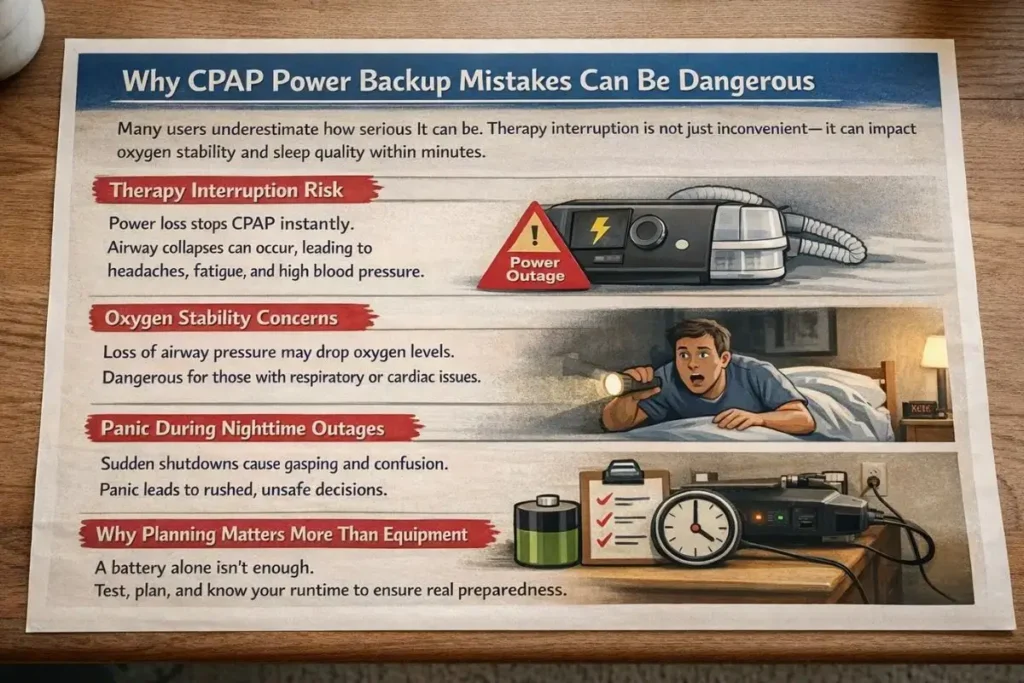
Why CPAP Power Backup Mistakes Can Be Dangerous
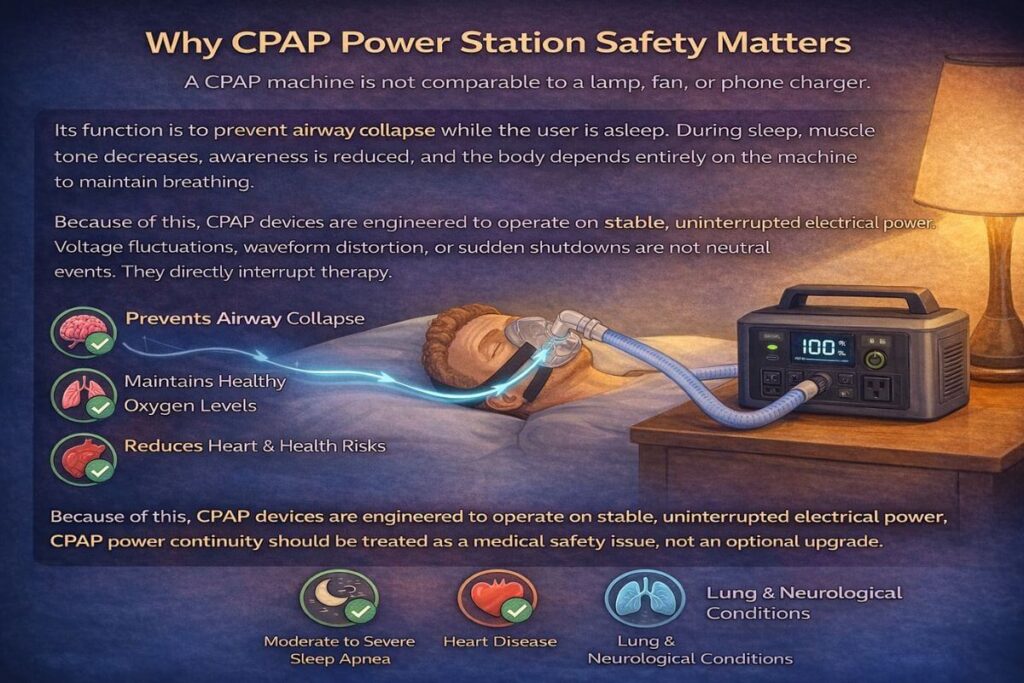
Many users underestimate how serious It can be. Therapy interruption is not just inconvenient—it can impact oxygen stability and sleep quality within minutes.
Therapy Interruption Risk
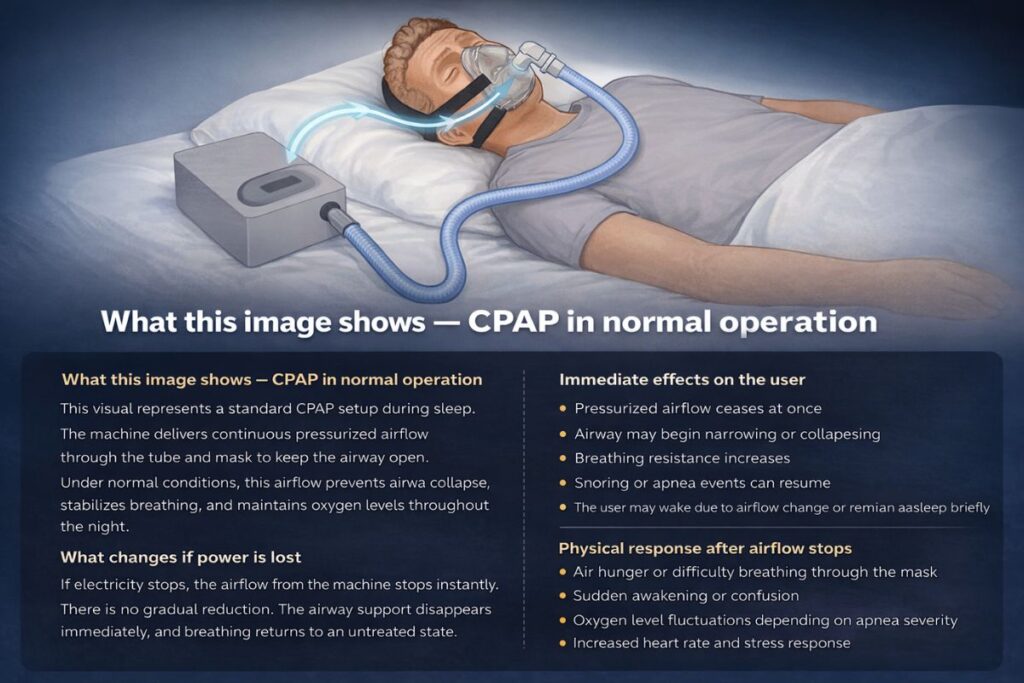
When power fails, CPAP therapy stops instantly unless backup power activates. For users with moderate to severe obstructive sleep apnea, this can mean repeated airway collapse throughout the night. Even one untreated night may cause morning headaches, daytime fatigue, or elevated blood pressure.
Oxygen Stability Concerns
If you rely on consistent airway pressure, losing power may cause drops in oxygen saturation. Some users with coexisting respiratory or cardiac conditions are at higher risk. It often ignore this physiological impact.
Panic During Nighttime Outages
Unexpected shutdowns trigger anxiety. Many users report waking up gasping or confused in darkness. Panic leads to rushed decisions—another reason It become dangerous.
Why Planning Matters More Than Equipment
Owning a battery isn’t the same as being prepared. The biggest CPAP power backup mistakes stem from assuming equipment alone equals safety. Planning, testing, and understanding runtime matter far more than brand names.
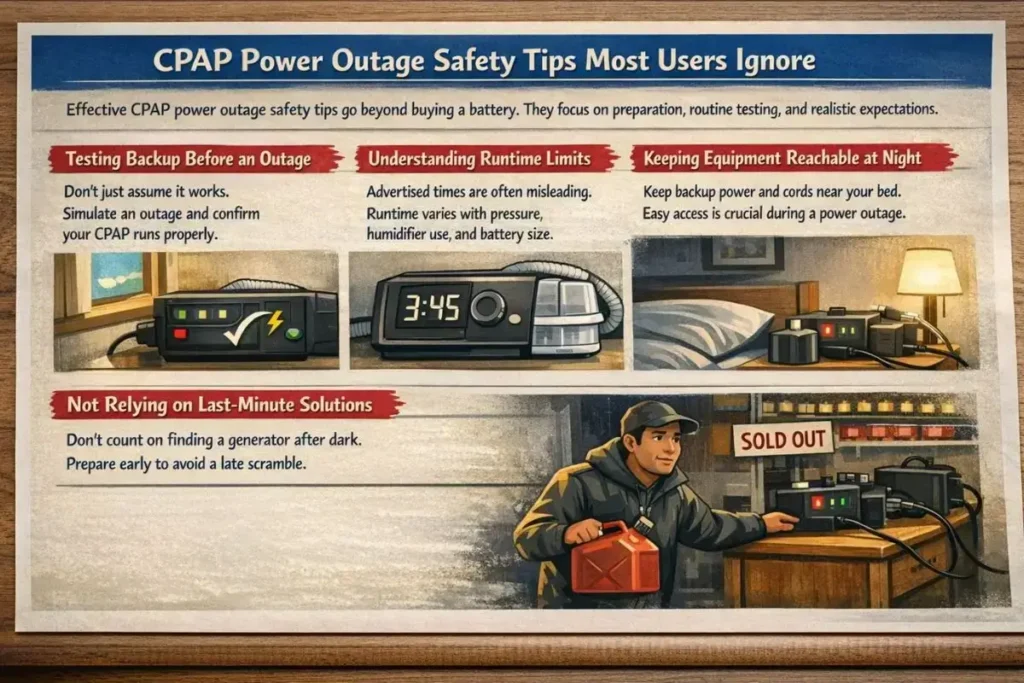
CPAP Power Outage Safety Tips Most Users Ignore
cpap power outage safety tips
Effective cpap power outage safety tips go beyond buying a battery. They focus on preparation, routine testing, and realistic expectations.
Testing Backup Before an Outage
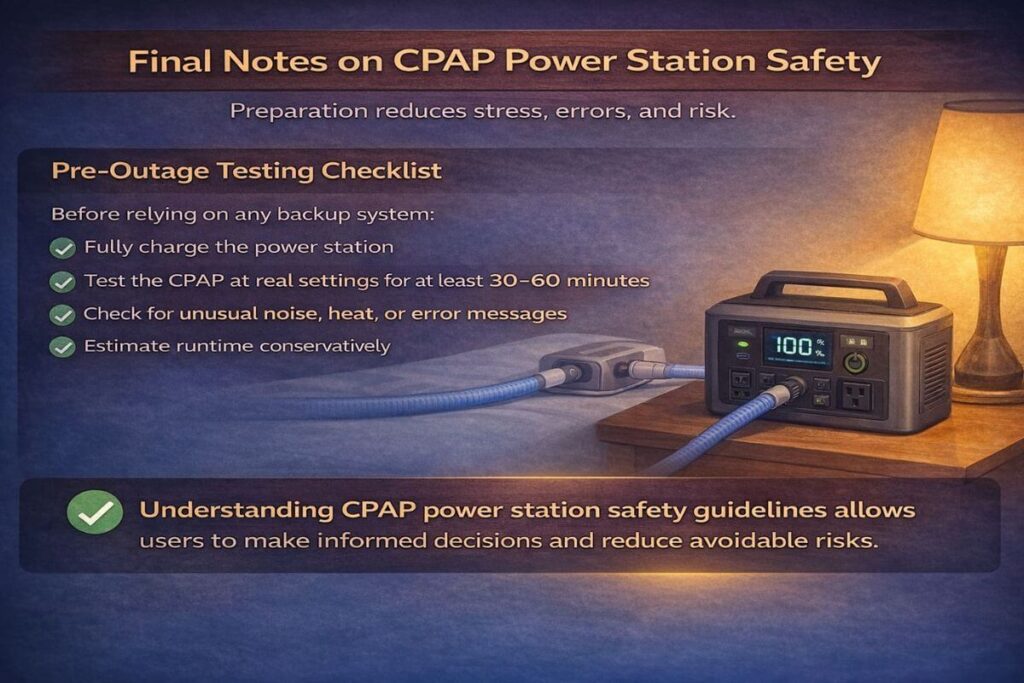
One of the most common mistakes It is never testing the battery under real conditions. Users plug it in once and assume it works. Instead, simulate an outage during the day and confirm your CPAP runs properly.
Understanding Runtime Limits
Manufacturers often advertise ideal runtimes. Real-world runtime depends on pressure settings, humidifier usage, and battery capacity. Ignoring these variables leads to dangerous It.
Keeping Equipment Reachable at Night
During an outage, you should not be searching for cables in the dark. Place your battery and cords within arm’s reach. Simple positioning prevents avoidable It during emergencies.
Not Relying on Last-Minute Solutions
Generators from neighbors or rushing to buy a battery after storm warnings is risky. It often occur when preparation starts too late.
CPAP Battery Backup Mistakes That Reduce Runtime
cpap battery backup mistakes
Many cpap battery backup mistakes revolve around poor calculations and unrealistic assumptions.
Buying an Undersized Battery
A small battery may power a CPAP for only a few hours. Users frequently underestimate watt-hours needed for a full night. This is one of the most frequent CPAP power backup mistakes.
Ignoring Humidifier Load
Humidifiers dramatically increase power consumption. Leaving it on high while running on battery can cut runtime in half. Many cpap battery backup mistakes happen because users forget to disable heated humidity during outages.
Not Calculating Full-Night Usage
If you sleep 8 hours, your backup must support at least that duration—plus a safety buffer. CPAP power backup mistakes occur when users plan for “average” instead of personal usage patterns.
Assuming Manufacturer Runtime
Marketing claims often assume low pressure and no humidifier. Real-world conditions differ. Trusting advertised numbers blindly is one of the most overlooked CPAP power backup mistakes.
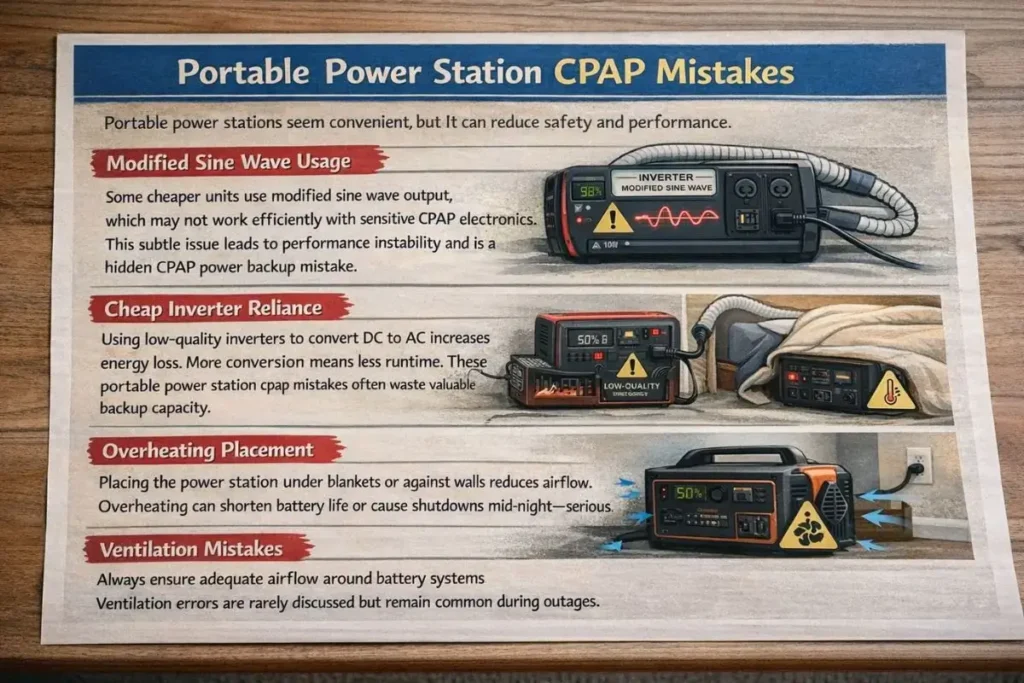
Portable Power Station CPAP Mistakes
portable power station cpap mistakes
Portable power stations seem convenient, but It can reduce safety and performance.
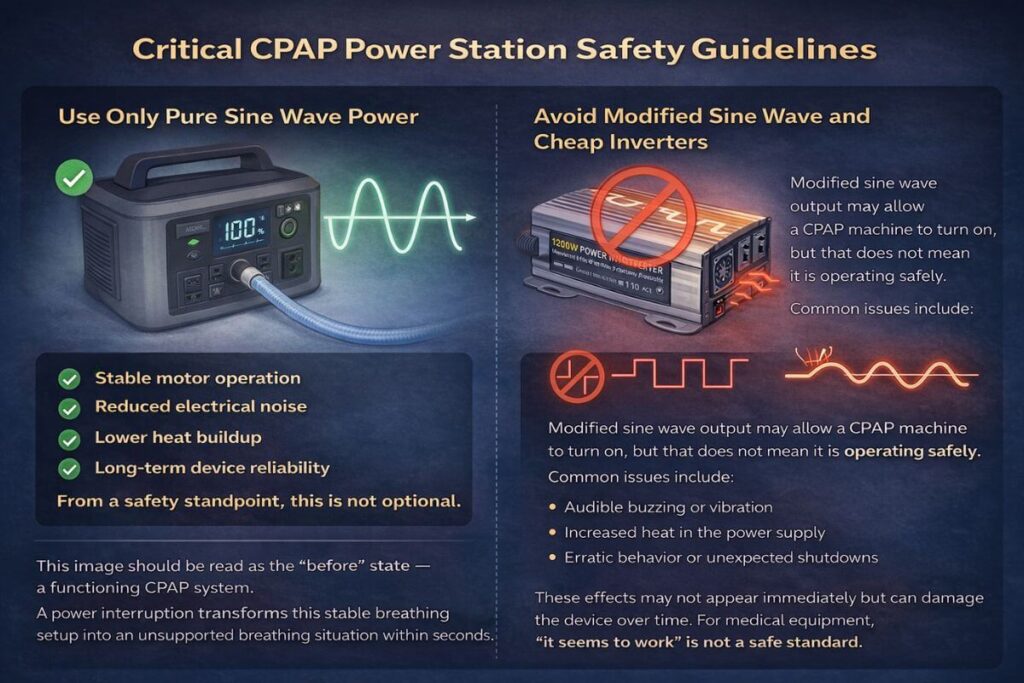
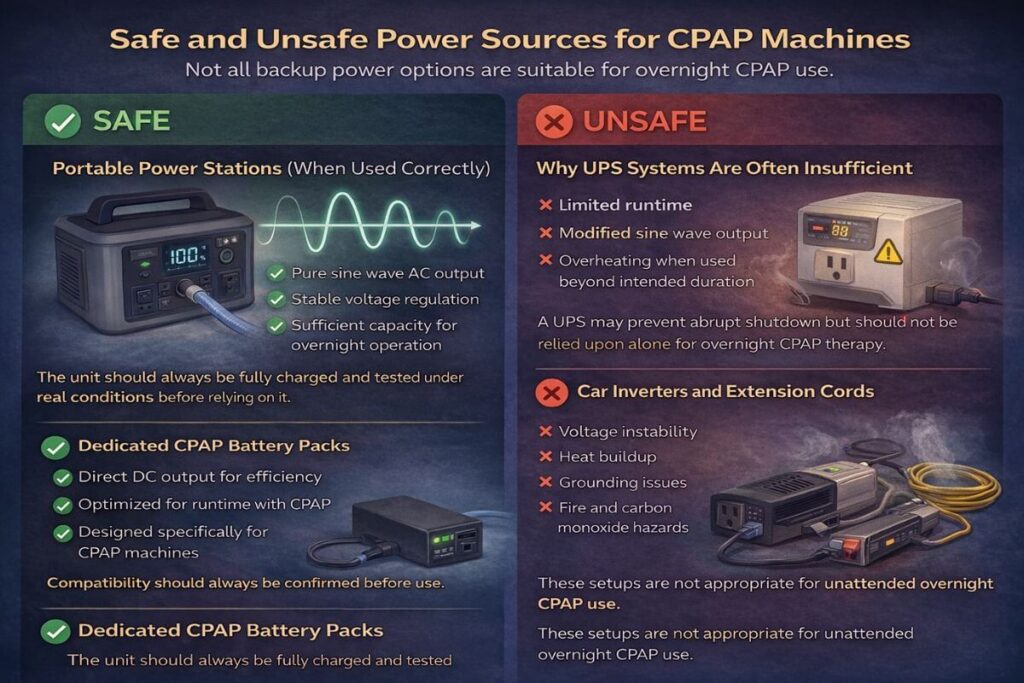
Modified Sine Wave Usage
Some cheaper units use modified sine wave output, which may not work efficiently with sensitive CPAP electronics. This subtle issue leads to performance instability and is a hidden CPAP power backup mistake.
Cheap Inverter Reliance
Using low-quality inverters to convert DC to AC increases energy loss. More conversion means less runtime. These portable power station cpap mistakes often waste valuable backup capacity.
Overheating Placement
Placing the power station under blankets or against walls reduces airflow. Overheating can shorten battery life or cause shutdowns mid-night—serious It.
Ventilation Mistakes
Always ensure adequate airflow around battery systems. Ventilation errors are rarely discussed but remain common It during outages.
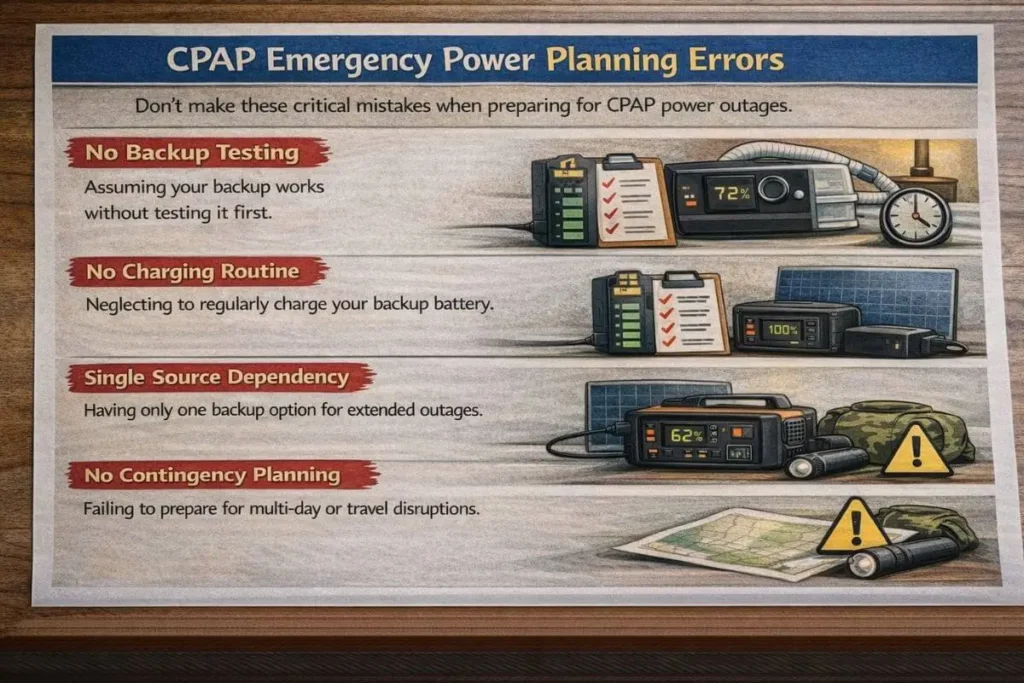
CPAP Emergency Power Planning Errors
cpap emergency power planning
Strong It prevents last-minute chaos, medical risk, and avoidable CPAP power backup mistakes. Many users think owning a battery equals preparedness. It doesn’t. True planning means testing, maintaining, and thinking beyond a single night scenario. Most CPAP power backup mistakes happen not because people lack equipment—but because they lack a structured system.
No Backup Testing
One of the most common It is assuming your backup will work simply because it powered on once. Batteries degrade. Cables loosen. Settings change. Firmware updates happen. Pressure levels increase over time.
If you do not test your full setup—machine, battery, cables, humidifier settings—under real-world conditions, you are gambling with your therapy. A proper test means:
- Disconnecting main power completely
- Running your CPAP for at least 1–2 hours on battery
- Monitoring noise, stability, and overheating
- Checking remaining battery percentage afterward
Quarterly testing ensures you catch failures before they catch you at 2 a.m. During severe weather seasons, testing monthly is even safer. Preventing It starts with controlled simulations, not assumptions.
No Charging Routine
Batteries left partially charged for long periods slowly lose capacity. Lithium batteries may appear “full,” but internal degradation reduces real runtime. This silent decline is one of the most overlooked CPAP power backup mistakes.
A simple solution is to create a charging calendar:
- Recharge after every test
- Top up monthly even if unused
- Store batteries at manufacturer-recommended charge levels
- Avoid extreme heat or freezing storage conditions
When outages happen, you don’t want uncertainty about your charge status. It often begin with, “I thought it was charged.”
Single-Source Dependency
Relying on only one battery system is risky in areas prone to storms, hurricanes, or winter grid failures. Multi-night outages are increasingly common. If your only battery fails, you have no safety net.
Effective cpap emergency power planning considers layered protection:
- Primary battery system
- Secondary charging option (vehicle, generator, or solar input)
- Backup location if home power is out long-term
Single-source dependency is one of the most dangerous CPAP power backup mistakes because it creates a false sense of security.
No Contingency Planning
Ask yourself:
- What if the outage lasts 48–72 hours?
- What if you are traveling?
- What if roads are blocked during a storm?
- What if your battery fails mid-night?
It often stem from narrow thinking—planning only for “short” outages. Real cpap emergency power planning accounts for worst-case scenarios, not best-case assumptions.
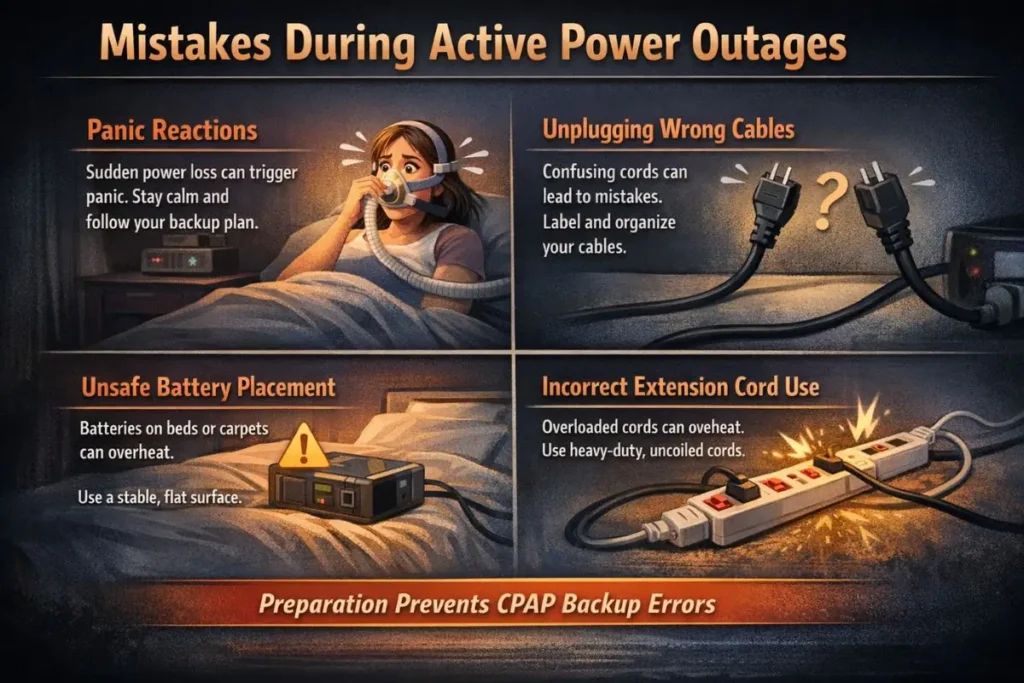
Mistakes During Active Power Outages
Even well-prepared users can make It once the outage begins. Darkness, stress, and sudden silence from your machine can trigger rushed decisions.
Panic Reactions
When CPAP airflow stops suddenly, many users wake up disoriented. Heart rate increases. Breathing feels unstable. Panic sets in. Panic leads to poor decisions—grabbing the wrong cable, unplugging adapters, or mishandling batteries.
The key is muscle memory. If you’ve tested your setup before, you will know exactly what to do. Calm execution prevents avoidable CPAP power backup mistakes during real emergencies.
Unplugging Wrong Cables
In low light, cables look similar. Disconnecting the wrong adapter may:
- Reset device settings
- Damage connectors
- Interrupt battery activation
- Waste precious time
Labeling cords clearly and organizing them reduces this risk dramatically. Small preparation eliminates large CPAP power backup mistakes.
Unsafe Battery Placement
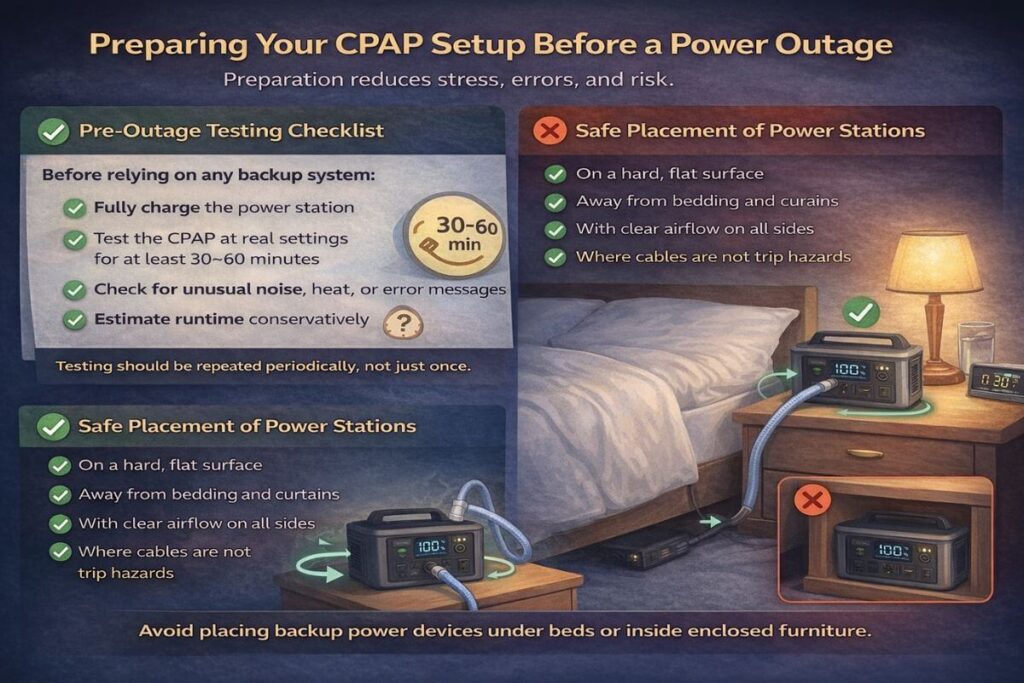
During outages, users sometimes move batteries onto beds, carpets, or near water sources. This is dangerous. Batteries generate heat and need stable placement.
Best practice:
- Place on a flat, hard surface
- Ensure proper ventilation
- Keep away from moisture
- Avoid covering with blankets
Unsafe placement is one of the more physically hazardous of It.
Using Extension Cords Incorrectly
Overloaded or thin extension cords can overheat, especially when powering high-draw devices like CPAP units with humidifiers. During storms, damaged wiring increases fire risk.
If extension cords are unavoidable:
- Use heavy-duty rated cords
- Avoid daisy-chaining multiple cords
- Keep cords fully uncoiled
- Inspect for damage regularly
Electrical safety is part of avoiding It—not separate from it.
Safety Mistakes With CPAP Humidifiers
Humidifiers improve comfort but dramatically increase energy demand. Many CPAP power backup mistakes are directly tied to heated humidifier use during battery operation.
Leaving Humidifier on High During Battery Use
Heated humidification can double or even triple power consumption. On battery, this significantly reduces runtime. Some users unknowingly drain their battery halfway through the night because humidity settings were left unchanged.
During outages:
- Turn off heated humidity
- Use passive humidity if available
- Consider lowering tube heat
This simple adjustment prevents some of the most expensive CPAP power backup mistakes.
Not Understanding Power Draw
Many users never calculate actual watt-hour usage. CPAP pressure settings, heated tubing, and humidity all contribute to consumption. Without understanding power draw, it is impossible to plan realistically.
Knowledge eliminates uncertainty—and prevents It driven by misinformation.
Overheating Risks
Continuous heating from humidifiers increases strain on batteries and inverters. Overheating can cause automatic shutdown, cutting therapy mid-night.
Monitoring ventilation and reducing load protects both your battery and your safety.
Medical Risk Mistakes Users Make
CPAP power backup mistakes are not just technical errors. They carry medical consequences.
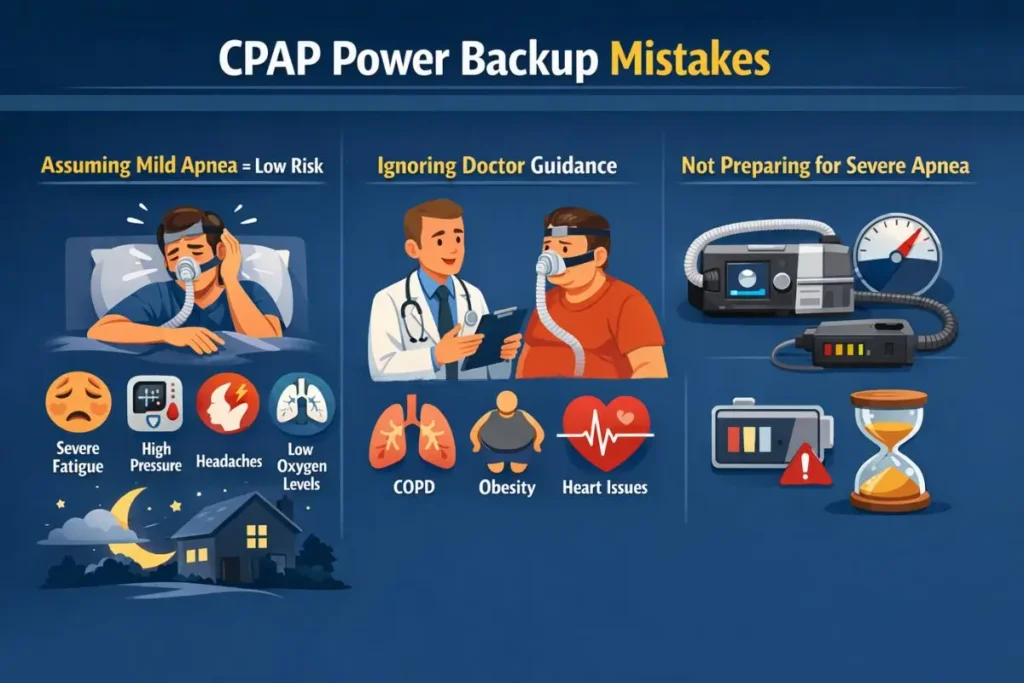
Assuming Mild Apnea = Low Risk
Some users believe mild sleep apnea doesn’t require backup planning. However, even one untreated night can cause:
- Severe fatigue
- Elevated blood pressure
- Headaches
- Reduced oxygen stability
Repeated untreated nights during extended outages increase health strain. Underestimating your condition is one of the subtle but serious It.
Ignoring Doctor Guidance
Patients with severe apnea, obesity hypoventilation, COPD, or cardiac conditions face higher risks from therapy interruption. Discussing cpap emergency power planning with a healthcare provider ensures proper preparation.
Medical personalization reduces dangerous CPAP power backup mistakes.
Not Preparing for Severe Apnea
High-pressure settings require more energy. If your pressure has increased over time but your battery capacity hasn’t, runtime shrinks. Many CPAP power backup mistakes occur because equipment planning doesn’t evolve with medical needs.
How to Build a Safe CPAP Backup Strategy
Avoiding It requires structure, repetition, and realism—not guesswork.
Testing Schedule
Commit to testing your full system every three months. Simulate a real outage by unplugging main power completely and running your CPAP under typical night settings.
Track:
- Starting battery percentage
- End-of-test battery percentage
- Estimated full-night capacity
Documenting results eliminates uncertainty and reduces CPAP power backup mistakes.
Charging Routine
Create a predictable routine:
- Recharge after each use
- Monthly maintenance charging
- Avoid long-term full depletion
- Store in moderate temperatures
Consistency prevents the “dead battery surprise”—one of the most frustrating CPAP power backup mistakes.
Runtime Buffer
Never plan for exact usage. Add a 20–30% safety buffer. If you sleep 8 hours, prepare for 10 hours of runtime. Weather events are unpredictable, and stress may extend sleep disruptions.
A buffer protects against miscalculation-based It.
Equipment Placement
Keep your battery:
- Elevated
- Ventilated
- Within arm’s reach
- Away from moisture
Organization improves reaction speed during outages and minimizes emergency CPAP power backup mistakes.
Realistic Overnight Backup Planning
Preparation must reflect real-world conditions—not ideal ones.
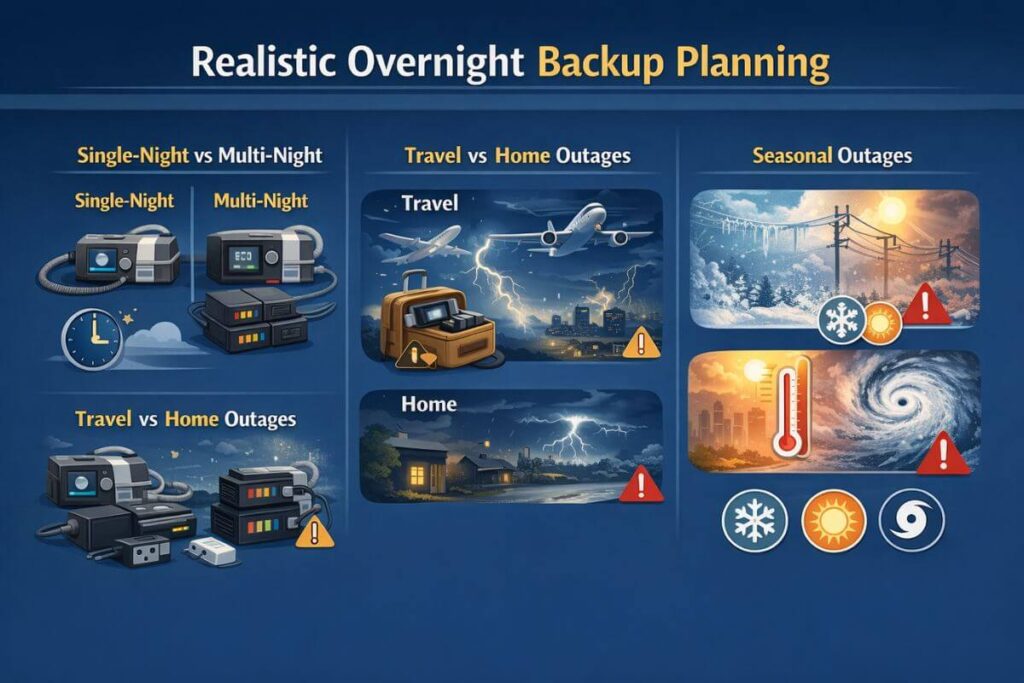
Single-Night vs Multi-Night
If you live in an area with frequent short outages, one full-night battery may be sufficient. But in storm-prone or rural regions, outages can last several days. Planning only for a single night is one of the common CPAP power backup mistakes.
Travel vs Home Outages
Travel introduces new variables: unfamiliar power outlets, hotel grid failures, flight delays. Portable planning matters. Always carry tested backup options when traveling with CPAP equipment.
Many CPAP power backup mistakes happen away from home, where backup options are limited.
Seasonal Outages
Winter storms can freeze power lines. Summer heat waves strain grids. Hurricane seasons create multi-day outages. Your cpap emergency power planning should adjust seasonally.
Reassess before storm season begins. Seasonal neglect leads to repeated CPAP power backup mistakes year after year.
FAQs
What is the biggest mistake CPAP users make during power outages?
The biggest CPAP power backup mistakes involve assuming a battery will last the entire night without testing it under real conditions. Lack of testing leads to overconfidence and mid-night failure.
Is a small battery enough for one night?
It depends on your pressure settings and humidifier usage. Many CPAP power backup mistakes occur when users underestimate actual consumption and forget runtime buffers.
What happens if backup power fails?
If both main power and backup fail, therapy stops. Severe apnea patients may experience fragmented sleep and oxygen drops. Having contingency plans reduces the risk of compounded CPAP power backup mistakes.
How should I prepare before a power outage?
Preparation includes testing equipment, charging batteries regularly, disabling humidifiers during battery use, and keeping cables organized. Avoiding CPAP power backup mistakes starts long before storm season.
Final Thoughts: Preparation Prevents Risk
CPAP power backup mistakes rarely happen because people don’t care. They happen because users assume “it won’t happen to me.” But power outages are unpredictable. Safety comes from planning, testing, and understanding your real energy needs. By eliminating common CPAP power backup mistakes, you protect your therapy, your sleep quality, and your overall health. Take action now—review your setup, test your system, and build a reliable backup plan before the next outage catches you off guard.
Related tags:
#cpapbackuppower #cpapbatterybackup #cpappoweroutage #cpappowersafety #portablepowerstationcpap