
CPAP humidifier power usage plays a major role in how long a backup battery lasts and how safely therapy continues during outages. Many users assume the airflow motor consumes most electricity, but the humidifier heating system often becomes the largest energy draw during overnight use. Understanding CPAP humidifier power usage helps prevent unexpected shutdowns, unsafe battery planning, and discomfort during therapy interruptions.
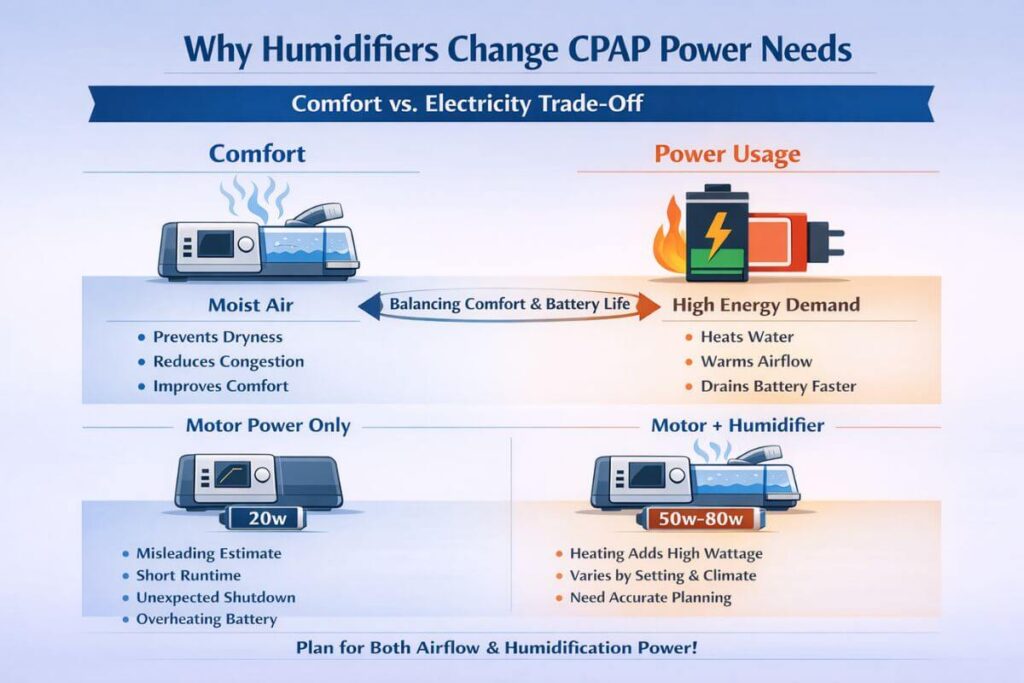
Why Humidifiers Change CPAP Power Needs
Comfort vs Electricity Trade-Off
Humidification improves comfort by preventing dry air irritation, nasal congestion, and throat dryness. However, increasing humidity requires heating water and sometimes warming the air pathway. This significantly raisesCPAP humidifier electricity consumption, especially when used continuously through the night.
When planning backup power, users must balance comfort and energy demand. Higher humidity settings directly increase CPAP humidifier power usage, which reduces battery runtime.
Why Most Users Underestimate Humidifier Load
Many users calculate battery needs based only on motor wattage. This leads to inaccurate planning. The humidifier often consumes as much or more energy than the airflow system.
Misjudging CPAP humidifier power usage results in:
- Shorter-than-expected runtime
- Sudden therapy interruption
- Battery overheating under load
Accurate planning requires recognizing that CPAP humidifier electricity consumption varies based on settings, climate, and duration.
How CPAP Humidifiers Use Electricity
Heating Element Power Demand
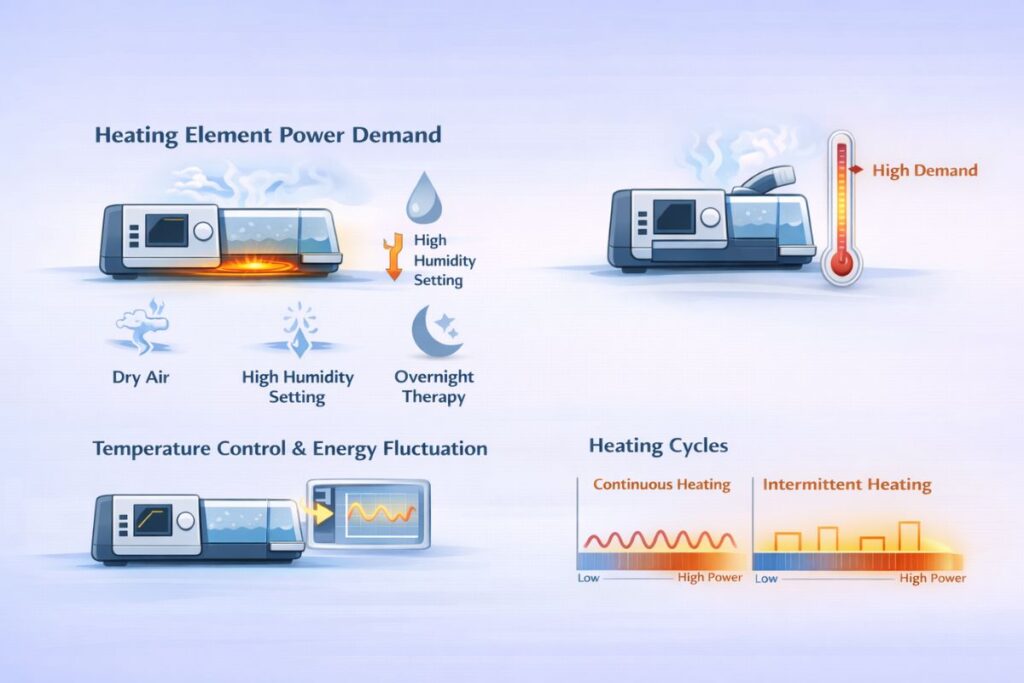
The primary source of CPAP humidifier power usage is the heating plate beneath the water chamber. This component warms water to generate moisture and maintain stable humidity levels.
Energy demand increases when:
- Ambient air is dry
- Higher humidity settings are selected
- Therapy runs continuously overnight
Water Temperature Control and Energy Use
Modern systems regulate water temperature to prevent excessive condensation or dryness. This temperature control requires ongoing electrical input.
As the device adjusts heat levels, CPAP humidifier electricity consumption fluctuates rather than remaining constant.
Continuous vs Intermittent Heating Cycles
Some humidifiers maintain steady heat, while others cycle on and off. Continuous heating increases CPAP humidifier power usage, whereas intermittent cycles reduce energy demand but still contribute significantly to total consumption.
Heated Tubing and Additional Power Consumption
Condensation Prevention vs Energy Use
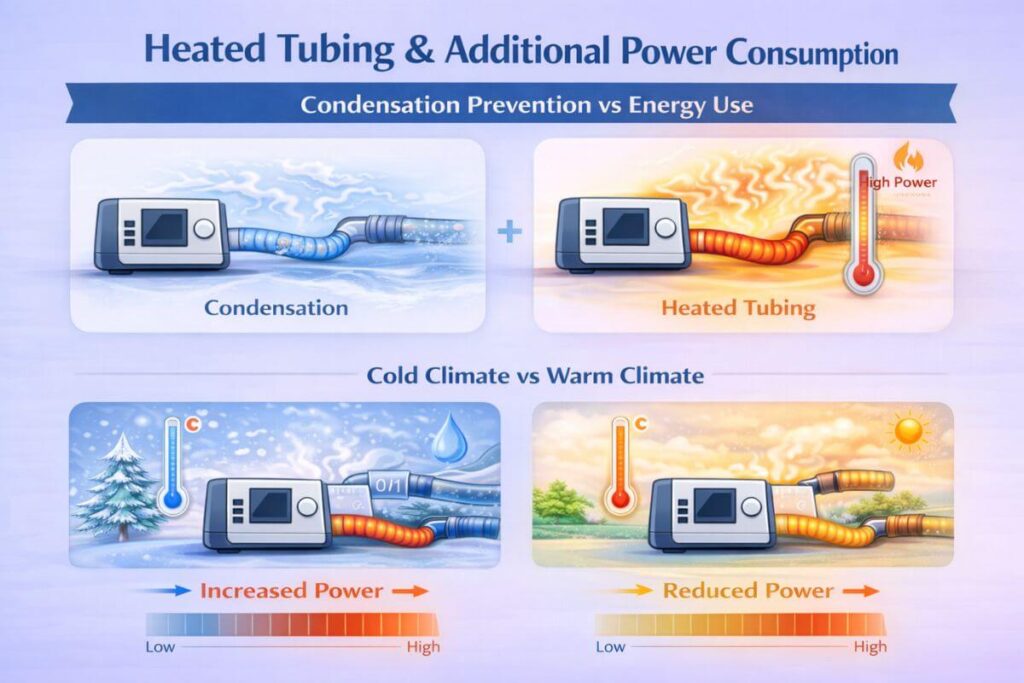
Heated tubing reduces condensation and maintains comfort, but it adds additional electrical load. CPAP heated tubing power requirements vary based on temperature settings and environmental conditions.
Using heated tubing together with humidification increases overall energy demand.
Cold Climate vs Warm Climate Differences
Environmental temperature directly affects CPAP heated tubing power needs. Cold rooms require more heating to maintain airflow temperature, increasing total consumption.
Warm environments reduce heating demand, lowering combined CPAP humidifier electricity consumption.
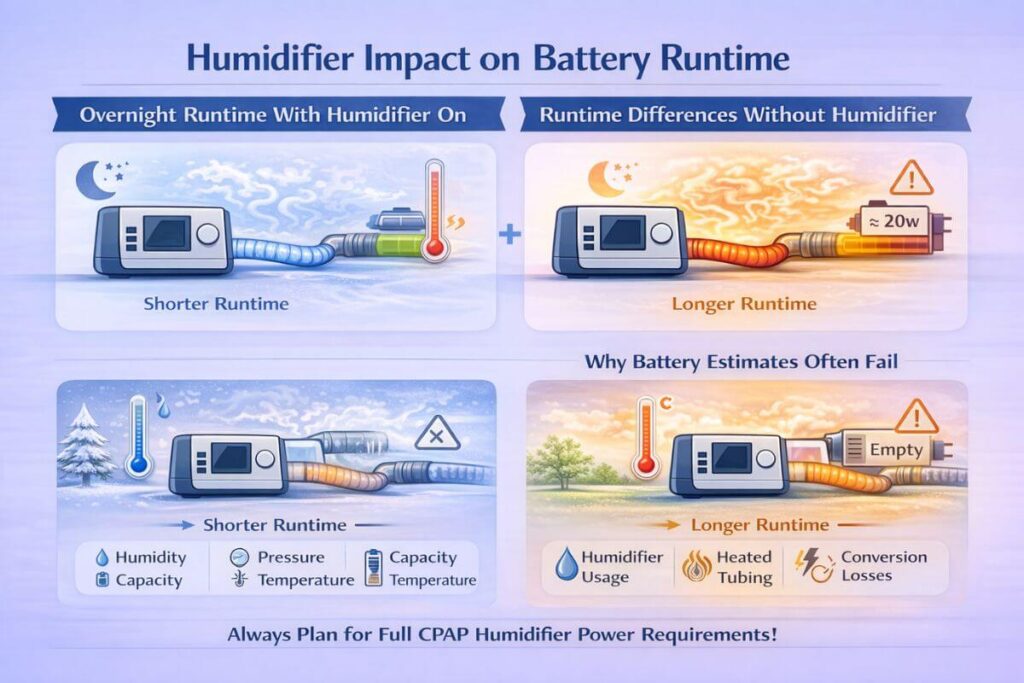
Humidifier Impact on Battery Runtime
Overnight Runtime With Humidifier On
When humidification is active, battery runtime decreases significantly. CPAP battery runtime with humidifier depends on:
- Humidity setting
- Therapy pressure
- Battery capacity
- Ambient temperature
Even modest humidifier settings can shorten runtime by several hours.
Runtime Differences Without Humidifier
Disabling humidification lowers electrical load. CPAP power without humidifier becomes easier to sustain on limited backup energy.
Many users experience extended runtime when humidification is temporarily reduced during outages.
Why Battery Estimates Often Fail
Battery estimates frequently fail because they exclude humidifier load. Planning based solely on motor wattage leads to unexpected shutdowns.
Accurate calculations must include:
- CPAP humidifier power usage
- CPAP heated tubing power
- Conversion losses
- Variable heating cycles
Practical Calculation: Estimating CPAP Humidifier Power Usage
A simplified approach:
- Identify average device wattage without humidifier.
- Add estimated humidifier load.
- Include heating cycle variability.
- Calculate expected runtime conservatively.
Example logic:
- Base airflow: low-to-moderate wattage
- Humidifier heating: additional load
- Heated tubing: extra demand
Total consumption becomes the sum of all active components. Planning must reflect worst-case overnight use.
When to Turn Off Humidifier on Backup Power
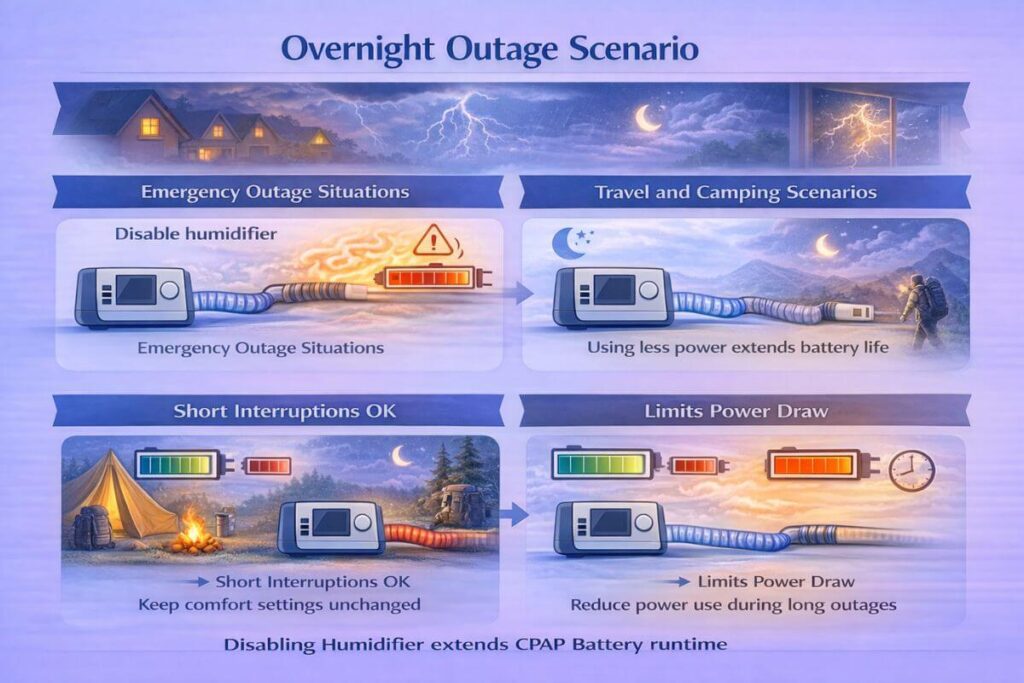
Overnight Outage Scenario
During a nighttime outage, users may continue sleeping until airflow stops. When backup power activates, the humidifier heating element often begins drawing energy immediately. This increases total demand and reduces available runtime.
In extended outages, lowering humidity settings or temporarily using cpap power without humidifier may help maintain airflow support for a longer period. In these situations, therapy continuity becomes the priority, while comfort adjustments can follow based on need.
Emergency Outage Situations
During outages, disabling humidification may extend battery life and reduce risk of shutdown. This approach improves CPAP battery runtime with humidifier planning by prioritizing airflow continuity.
Travel and Camping Scenarios
Limited charging access requires energy conservation. Many users temporarily reduce CPAP humidifier electricity consumption in these environments.
Short-Term vs Long-Term Use
Short interruptions may not require changes. Extended outages often require adjusting CPAP humidifier power usage to preserve therapy continuity.
Health & Comfort Considerations
Dryness and Nasal Irritation
Reducing humidity during backup use can lead to noticeable dryness in the nose, throat, and airways. Some users may experience irritation, congestion, or difficulty tolerating airflow when moisture levels are lowered. While this adjustment may help conserve battery power, comfort should not be ignored. If dryness becomes severe, therapy adherence may drop, which can affect overall treatment effectiveness.
Users Who Should Not Disable Humidifier
Not everyone can safely reduce or turn off humidification. Individuals with chronic sinus conditions, nasal inflammation, post-surgical recovery, or respiratory sensitivity often rely on consistent moisture to tolerate CPAP therapy. In these cases, changes to humidification should be made cautiously and ideally with medical input.
Medical Guidance vs Personal Adjustment
Humidifier settings are part of therapy comfort and effectiveness. Any major adjustment—especially during outages or battery use—should consider both medical guidance and real-world tolerance. Planning around cpap humidifier power usage should focus on maintaining therapy continuity while minimizing discomfort.
Safety Note on Backup Planning
Many users assume humidifier settings can remain unchanged during outages. In reality, CPAP humidifier power usage must be treated as a variable load. Heating demand increases with cold environments, high humidity settings, and longer therapy duration.
Testing real conditions is essential. Backup planning should never rely on estimated numbers alone. Including CPAP battery runtime with humidifier testing helps prevent sudden therapy interruption and improves safety planning.
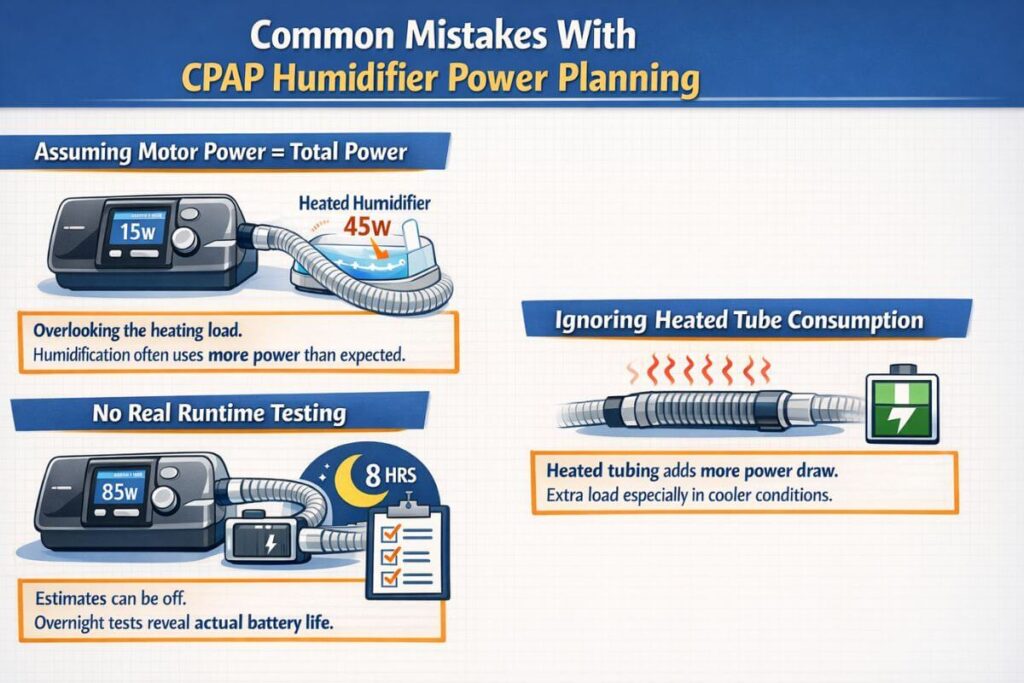
Common Mistakes With CPAP Humidifier Power Planning
Assuming Motor Power = Total Power
Many users estimate power needs based only on airflow motor consumption. This overlooks the heating load created by humidification. In reality, cpap humidifier electricity consumption often accounts for a large portion of total overnight energy use, which directly affects backup runtime.
Ignoring Heated Tube Consumption
Heated tubing adds an additional electrical load that is frequently underestimated. Cpap heated tubing power increases total demand, particularly in cooler environments where condensation prevention requires continuous heating.
No Real Runtime Testing
Battery estimates based on theoretical numbers are often inaccurate. Actual overnight testing is the most reliable way to understand real cpap humidifier electricity consumption and prepare for outages. Testing helps identify how long therapy can run safely with current humidifier settings.
FAQs About CPAP Humidifier Power
Does humidifier double CPAP power usage?
Not always, but it can significantly increase total electricity demand. The airflow motor and humidifier heating element operate separately, and when both run continuously, overall CPAP humidifier power usage rises quickly. The exact increase depends on humidity level, room temperature, and duration of therapy.
Can CPAP run safely without humidifier overnight?
For many users, short-term use without humidification is possible. Airflow therapy continues normally, but dryness, throat irritation, or nasal discomfort may occur. Individuals with chronic sinus sensitivity or respiratory irritation should be cautious before disabling humidification.
Does humidity level change electricity use?
Yes. Higher humidity settings require more heating energy, which increases CPAP humidifier electricity consumption. Lower settings reduce load and may extend battery runtime, especially during outages.
How much battery runtime is lost with humidifier on?
Battery duration varies widely, but CPAP battery runtime with humidifier is typically shorter than when the humidifier is off. The heating element continuously draws power, which reduces total available runtime overnight.
Is heated tubing necessary for all users?
No. CPAP heated tubing power is most useful in colder environments where condensation is likely. In warm climates, tubing heat may be reduced or unnecessary, lowering total electricity demand.
Can backup planning ignore humidifier load?
No. Ignoring CPAP humidifier power usage results in inaccurate runtime estimates. Backup planning must include airflow motor, humidifier heating, and tubing energy use.
Why does battery drain faster in cold weather?
Cold environments increase heating demand. Both humidifier and tubing require more energy to maintain moisture and temperature, raising total CPAP humidifier electricity consumption and reducing battery runtime.
Does water level affect humidifier electricity usage?
Indirectly, yes. When water temperature drops due to evaporation, the heating element works harder to maintain humidity. This increases CPAP humidifier power usage over time.
Should humidifier always be turned off during outages?
Not necessarily. Comfort and medical needs must be considered. Some users may tolerate lower humidity, while others require it to prevent irritation. Backup planning should evaluate both safety and comfort.
How often should runtime testing be done?
Testing should be performed periodically, especially after battery replacement, seasonal changes, or equipment adjustments. Real-world testing reveals true CPAP humidifier electricity consumption and helps avoid unexpected shutdowns.
Do all CPAP models use similar humidifier power?
No. Heating efficiency, control systems, and design vary between devices. CPAP humidifier electricity consumption differs depending on configuration and usage patterns.
Is it safer to reduce humidifier before battery runs low?
Reducing humidity early can extend therapy runtime. Lower CPAP humidifier power usage helps maintain airflow continuity during prolonged outages.
What is the safest way to plan humidifier use with backup power?
Start with conservative estimates. Test real settings overnight, monitor power draw, and plan for worst-case conditions. Accurate understanding of CPAP humidifier power usage ensures safe and reliable therapy continuity.
Practical Observation From Real Use
Many users only recognize the impact of cpap humidifier electricity consumption after noticing reduced battery runtime during travel or power interruptions. Testing backup setups in advance and adjusting humidification gradually can improve both safety and comfort.
Understanding how cpap humidifier power usage behaves in real conditions helps users make informed decisions about battery planning, therapy adjustments, and overnight preparedness.
Related tags:
#cpapbackuppower #cpapbatterybackup #cpappoweroutage #cpappowersafety #portablepowerstationcpap