
CPAP power failure during sleep is something many users don’t think about until it actually happens. The machine runs quietly every night, and it’s easy to assume therapy will continue without interruption. But when power suddenly stops, airflow stops with it — and that can be confusing, uncomfortable, and sometimes risky depending on the user’s condition.
Understanding how cpap power failure during sleep affects breathing, sleep quality, and safety helps users prepare instead of reacting in panic. This guide explains what happens physically, what health risks exist, and what safety steps matter most.
Why CPAP Power Failure During Sleep Is a Serious Issue
CPAP Therapy Depends on Continuous Airflow
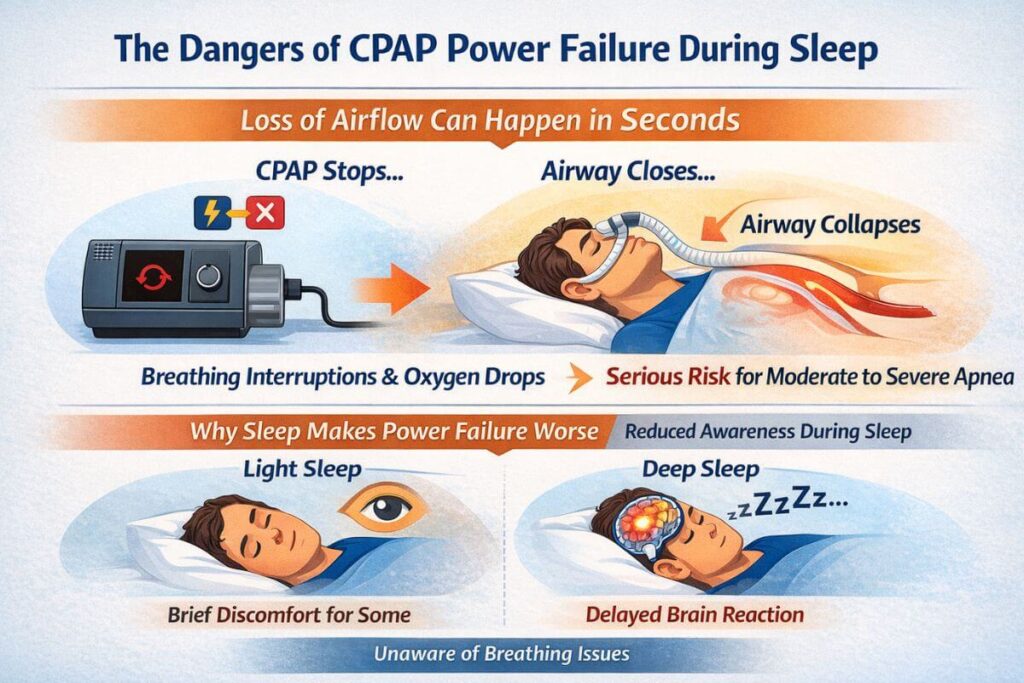
CPAP therapy works by maintaining consistent air pressure that keeps the airway open. The moment electricity stops, therapy stops. The airway can collapse again, and breathing patterns return to untreated sleep apnea conditions.
This change can happen within seconds. For some users it leads to brief discomfort. For others, especially those with moderate or severe apnea, it can lead to repeated breathing interruptions.
Why Sleep Makes Power Failure Riskier
When awake, a person notices airflow changes quickly. During sleep, awareness is reduced. The brain may take longer to respond, especially during deeper sleep stages. This delay is what makes cpap power failure during sleep more concerning than daytime interruption.
What Happens When a CPAP Stops Working at Night
Sudden Loss of Airflow
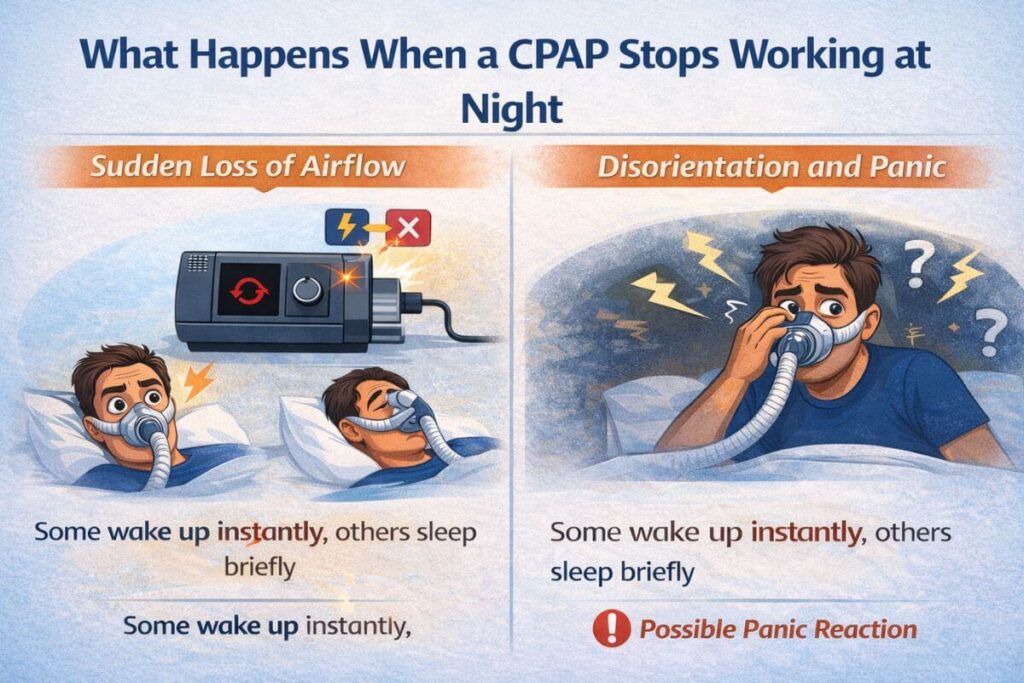
The most immediate effect of cpap power failure during sleep is airflow stopping instantly. There is no gradual decrease. The mask pressure changes and breathing resistance may feel different.
Some users wake immediately. Others remain asleep briefly, depending on sleep depth.
Breathing Through the Mask Without Pressure
Most CPAP masks allow passive breathing if power stops. However, breathing can feel unfamiliar or uncomfortable. This sensation alone can trigger anxiety when waking.
Disorientation and Panic
Waking up suddenly without airflow can cause confusion, especially in darkness. Some users feel shortness of breath before fully waking, which may increase panic response.
Health Effects of CPAP Power Failure During Sleep
Mild Sleep Apnea
Users with mild apnea may experience disturbed sleep and fatigue the next day. Health risk is usually lower, but repeated interruptions reduce therapy effectiveness.
Moderate Sleep Apnea
Apnea events return quickly. Oxygen levels may fluctuate, and the body enters stress response. Repeated occurrences affect sleep quality and cardiovascular health over time.
Severe Sleep Apnea
For severe apnea, cpap power failure during sleep may result in rapid oxygen drops and increased strain on the heart. People with existing heart or lung conditions are more vulnerable.
Why Some Users Don’t Wake Immediately
Deep Sleep Stages
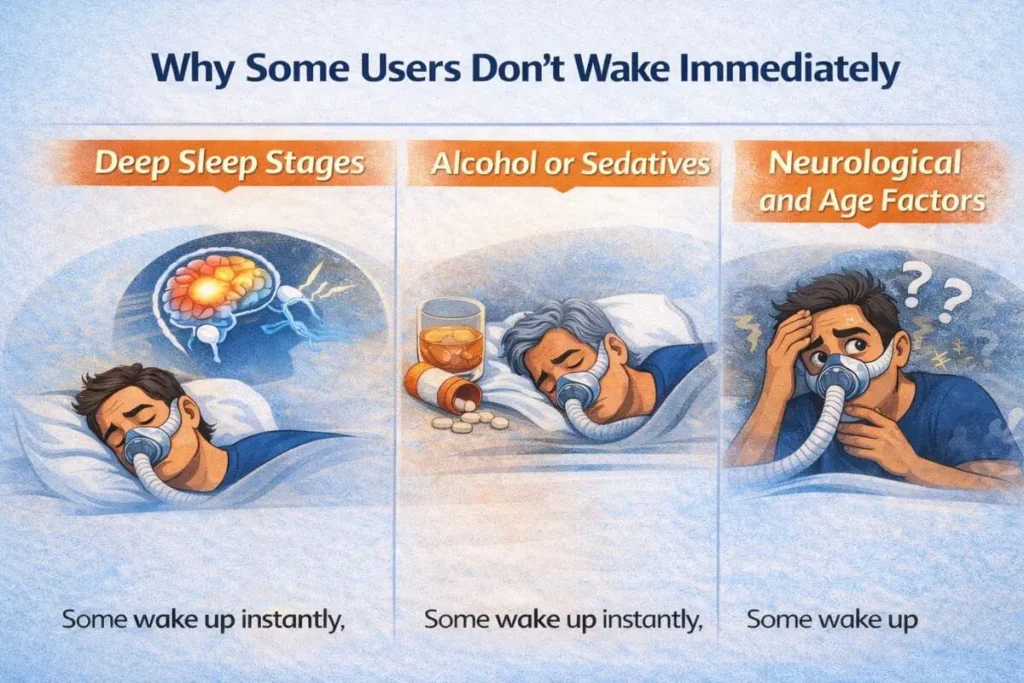
During deeper stages of sleep, the brain reduces responsiveness to external and internal changes. Airflow interruptions may not trigger immediate awakening, especially during slow-wave sleep. In these stages, the body is focused on recovery and neurological rest, and breathing disruptions can take longer to register.
When cpap power failure during sleep occurs at this point, the user may continue sleeping for several seconds or even minutes before becoming aware that airflow has stopped. This delay is one of the reasons uninterrupted therapy is important, particularly for people with moderate to severe apnea.
Alcohol or Sedatives
Alcohol and sleep medications affect how the brain responds to breathing changes. These substances can suppress the body’s natural alert system, making it slower to detect airflow loss. As a result, cpap power failure during sleep may go unnoticed for longer than usual.
For users who rely on nightly medication or occasionally consume alcohol, this factor increases the importance of stable power and backup planning.
Neurological and Age Factors
Older adults and individuals with neurological conditions may experience slower awakening responses. Sensory processing, reaction time, and breathing awareness can be affected by age-related changes.
When airflow stops, their body may take longer to respond, which extends the period without therapy. This does not happen in every case, but it is a realistic factor to consider when preparing for power interruptions.
Safety Risks During Nighttime CPAP Power Failure
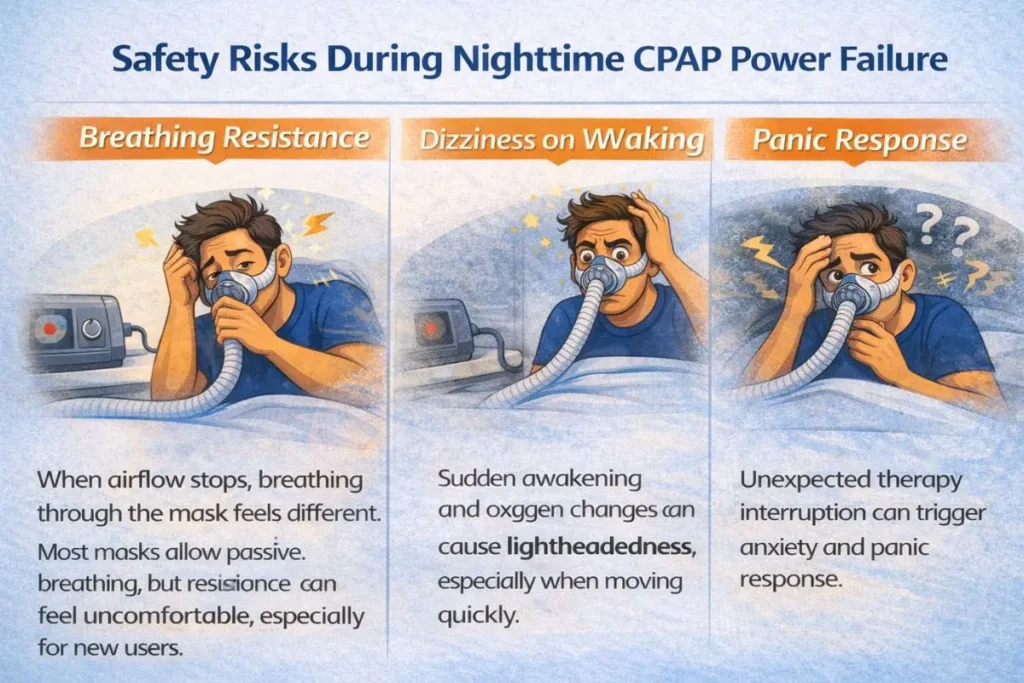
Breathing Resistance
When airflow stops, breathing through the mask feels different. Most masks allow passive breathing, but resistance can feel uncomfortable, especially for new users who are not familiar with that sensation.
This sudden change can lead to confusion, and some users instinctively try to adjust the mask instead of removing it, which prolongs discomfort.
Dizziness on Waking
Sudden awakening, combined with breathing changes and reduced oxygen stability, may cause lightheadedness. This is more noticeable when a person sits up quickly or stands to check equipment.
Taking a moment to stabilize breathing before moving reduces this risk.
Panic Response
Unexpected therapy interruption can trigger anxiety. Waking in darkness without airflow may feel alarming, particularly for people who depend heavily on CPAP therapy.
Understanding beforehand that cpap power failure during sleep can happen helps reduce panic and allows a calmer response.
How Long Can You Sleep Without CPAP Power?
Short-Term Interruption
A brief interruption may only disturb sleep without causing immediate harm. The body resumes natural breathing patterns, though apnea events may return temporarily.
However, therapy effectiveness is reduced when interruptions happen repeatedly.
Repeated Apnea Events
Longer power interruptions allow untreated apnea episodes to return. Breathing pauses, oxygen drops, and disrupted sleep cycles follow.
For people who experience frequent apnea events, even a single night without therapy can lead to noticeable fatigue and discomfort the next day.
Medical Risk Factors
Individuals with severe sleep apnea, cardiovascular conditions, lung disease, or obesity-related breathing disorders face higher risk. Their bodies rely more heavily on consistent therapy.
For these users, cpap power failure during sleep should be treated as a situation that requires preparation, not something left to chance.
Immediate Safety Steps After CPAP Power Failure
Remove Mask Calmly
The first step is to stay calm and remove the mask slowly. Sudden panic can make breathing feel harder than it is.
Once the mask is removed, breathing usually returns to normal.
Sit Upright
Sitting upright helps open the airway naturally and reduces breathing resistance. This position also helps prevent dizziness.
Check Power Source
After stabilizing breathing, check whether the issue is a local outage, a disconnected cable, or battery depletion.
Understanding the cause helps determine whether therapy can be restarted immediately.
Restart Therapy
If power returns quickly, restart the CPAP and confirm airflow stability before returning to sleep.
If backup power is available, switch calmly and resume therapy.
Preventing CPAP Power Failure During Sleep
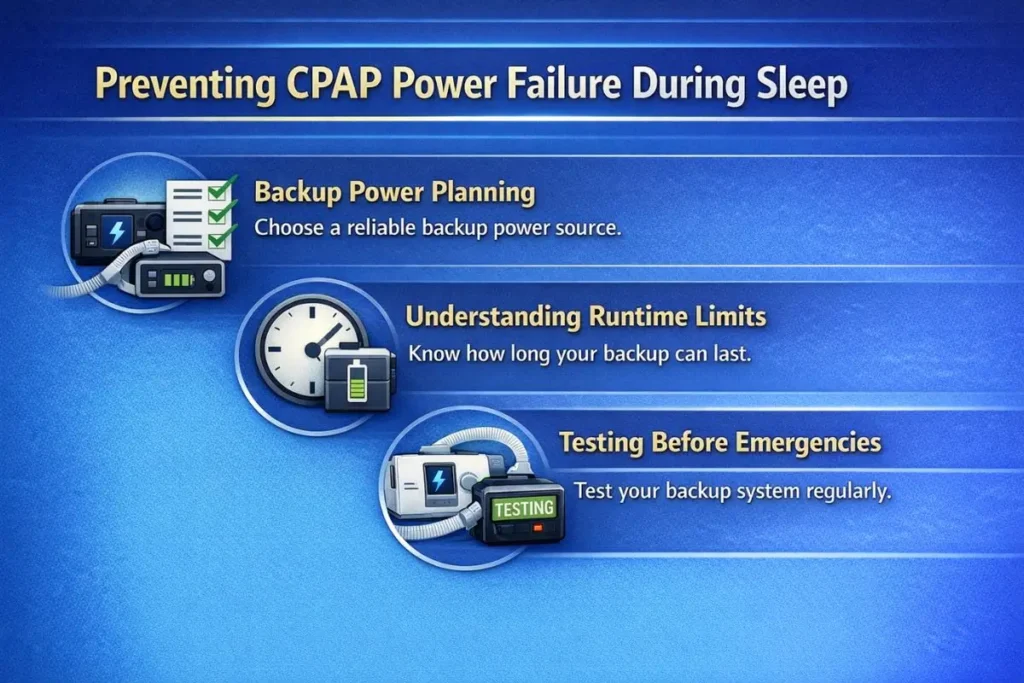
Backup Power Planning
Reliable backup power reduces the likelihood of therapy interruption. Users in areas with frequent outages benefit most from preparing in advance.
Planning removes uncertainty and allows therapy to continue without disruption.
Understanding Runtime Limits
Backup systems have limits. Knowing how long they can support therapy helps avoid unexpected shutdowns during the night.
This awareness allows users to adjust settings if necessary.
Testing Before Emergencies
Testing backup power during normal conditions provides valuable insight. Users learn how equipment behaves, how long it runs, and whether adjustments are needed.
Testing builds confidence and prevents confusion during real outages.
Health & Safety Procedures for CPAP Users
Keep Equipment Accessible
Backup cables, batteries, and power sources should be easy to reach. Searching for equipment in the dark increases stress and delays response.
Maintain Clear Airflow Area
Ventilation around both the CPAP machine and power equipment is important. Blocked airflow increases overheating risk.
Monitor Sleep Comfort
Changes in breathing comfort, unusual dryness, or mask discomfort may signal therapy interruption. Paying attention to these signs helps users respond faster.
Discuss Risk With Healthcare Provider
Users with severe apnea or additional health conditions should discuss backup planning with their healthcare provider. Professional guidance helps tailor safety strategies to individual needs.
Understanding personal risk makes preparation more effective and improves overall therapy reliability.
FAQs About CPAP Power Failure During Sleep
Is CPAP power failure during sleep dangerous?
It depends on apnea severity and overall health. Mild cases usually lead to disturbed sleep and fatigue. Moderate to severe apnea may result in oxygen drops, stress responses, and cardiovascular strain. Preparation reduces risk significantly.
Can you suffocate if CPAP stops working?
Most CPAP masks allow passive breathing, so suffocation is unlikely. However, breathing may feel uncomfortable or restricted. The main concern is untreated apnea returning, not lack of oxygen from the mask itself.
How should I respond immediately if my CPAP loses power at night?
Stay calm, remove the mask slowly, sit upright, and stabilize breathing. Then check the power source and restart therapy if possible. Panic makes breathing feel harder than it is.
Who is at highest risk during CPAP power failure?
People with severe sleep apnea, heart disease, lung conditions, obesity-related breathing disorders, and older adults are at higher risk. They benefit most from reliable backup planning.
Why is preparation more important than reacting?
During sleep, awareness is reduced. Preparation ensures therapy continues without panic, confusion, or safety risks.
Should I discuss backup planning with a doctor?
Yes, especially if apnea is severe or if other health conditions exist. Medical guidance helps determine appropriate safety measures.
Final Thoughts
CPAP power failure during sleep is not just an inconvenience. It affects therapy continuity, breathing stability, and overall safety. Understanding what happens and preparing ahead reduces panic and improves response.
Consistent therapy depends on continuous airflow. Continuous airflow depends on reliable power. Planning for cpap power failure during sleep ensures therapy continues even when electricity does not.
Related tags:
#cpapbackuppower #cpapbatterybackup #cpappoweroutage #cpappowersafety #portablepowerstationcpap